The administration granted a final deepwater port license and long-term export authorization for the $12 billion Gulf Horizon facility, asserting federal preemption to guarantee energy security.
WASHINGTON — President Donald Trump on Monday morning formally authorized the issuance of a comprehensive federal deepwater port license for the Gulf Horizon liquefied natural gas (LNG) export facility. The decision caps a contentious multi-year regulatory confrontation by invoking federal statutory preemption to override coastal consistency objections raised by state-level environmental authorities.
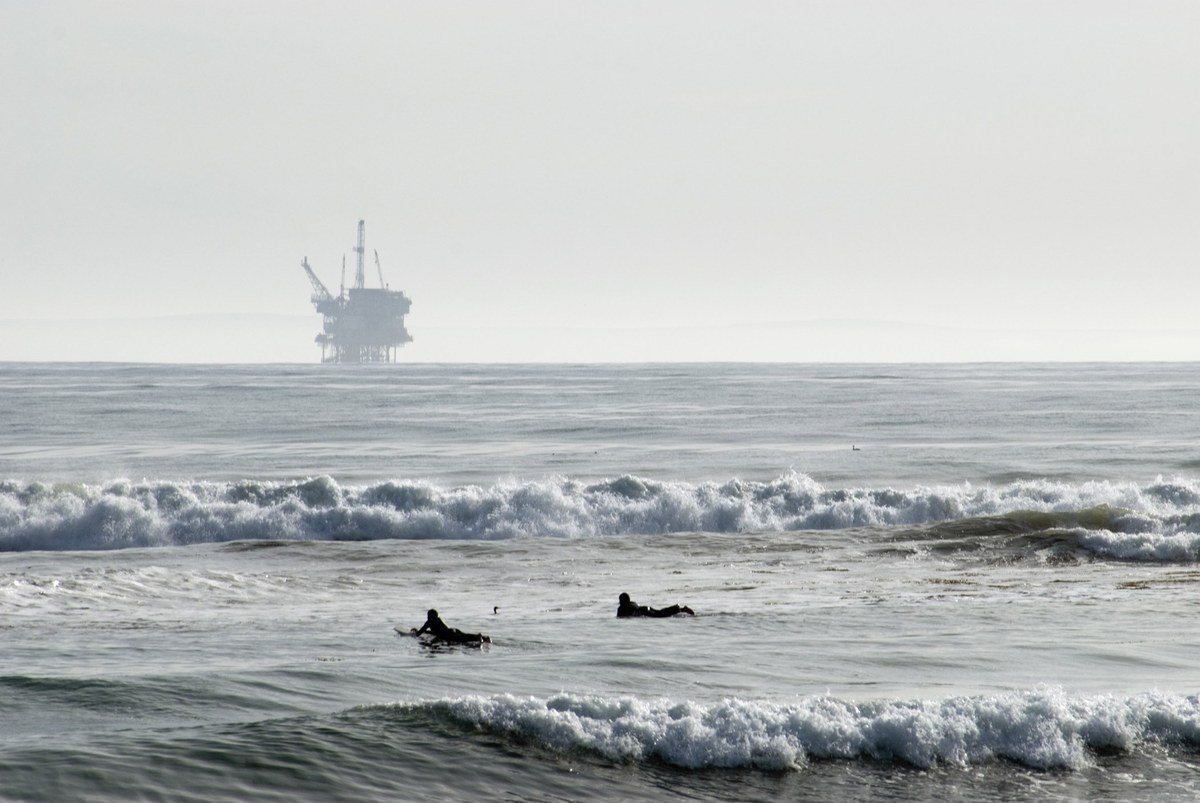
The presidential authorization, executed through joint directives to the Maritime Administration (MARAD), the Department of Transportation, and the Department of Energy (DOE), paves the way for immediate offshore construction of the $12.4 billion deepwater terminal situated 28 nautical miles off the Louisiana coast in federal outer continental shelf waters. Once fully operational in late 2028, the deepwater facility is projected to process and liquefy up to 3.2 billion cubic feet of natural gas per day, establishing it as one of the largest offshore energy export terminals in the Western Hemisphere.
The landmark permit green-light marks a decisive turning point in administrative energy policy. By granting non-FTA (Free Trade Agreement) export rights under Section 3 of the Natural Gas Act, the administration has decisively ended the regulatory freeze on major LNG projects that previously stalled billions in domestic capital investment and created deep uncertainty across transatlantic energy markets.
Asserting Federal Statutory Preemption Over Coastal Consistency
The central legal pillar of the administration’s approval rests upon federal preemption doctrines codified under the Deepwater Port Act of 1974 (33 U.S. Code § 1503). For more than eighteen months, regional coastal regulators and environmental coalitions had attempted to halt the deepwater project by withholding state-level Coastal Zone Management Act (CZMA) consistency certifications, alleging potential impacts on marine ecosystems and coastal wetlands.
In a detailed legal opinion published alongside the license authorization, the Department of Justice’s Office of Legal Counsel determined that Congress explicitly designed the Deepwater Port Act to vest ultimate licensing authority over offshore energy transit hubs directly in the Secretary of Transportation and the President. The administration concluded that when national energy security and interstate commerce are directly implicated, state regulatory agencies cannot exercise a de facto veto over federally sanctioned critical infrastructure in international and federal waters.
“American energy dominance is the bedrock of our national economic security and global diplomatic leverage,” President Trump said in an official statement announcing the license. “For too long, unelected regulatory panels have weaponized procedural delays to block our nation’s most critical energy infrastructure. By approving this terminal, we are putting thousands of American building tradesmen to work and guaranteeing that American clean natural gas powers the free world.”
Geopolitical Leverage and the European Energy Shield
The strategic timing of the approval carries profound foreign policy ramifications. European allies, still navigating structural vulnerabilities resulting from the complete cutoff of Russian pipeline natural gas, have increasingly relied on Gulf Coast LNG cargoes to maintain industrial capacity and heat residential grids during peak winter months.
Commercial contracts associated with the Gulf Horizon facility include long-term 20-year offtake commitments with major allied utilities across Germany, Poland, Japan, and South Korea. Energy analysts calculate that the terminal’s offshore deepwater design—which allows ultra-large Q-Max LNG carriers to dock and load without navigating congested inland river channels or shallow shipping canals—will cut shipping turnaround times by 48 hours and significantly lower transatlantic freight premiums.
The aggressive expansion of domestic energy transit builds upon a series of recent federal initiatives aimed at unlocking domestic resource development, echoing the administration’s recent civil works waterway modernization measures and regulatory streamlining designed to insulate the American economy from foreign supply shocks.
Industry Acclaim, Union Support, and Courtroom Battles Ahead
The project received immediate and enthusiastic backing from national building trades unions and domestic pipeline operators. The North America’s Building Trades Unions (NABTU) noted that the deepwater port construction phase will generate more than 6,500 high-paying union construction jobs across Louisiana, Texas, and Mississippi, alongside approximately 400 permanent marine engineering and terminal operations positions.
Conversely, a national coalition of environmental litigation organizations filed an emergency petition for review in the U.S. Court of Appeals for the District of Columbia Circuit within hours of the announcement. Challengers contend that the administration’s environmental review failed to adequately calculate life-cycle greenhouse gas emissions associated with upstream shale drilling in the Haynesville and Permian basins.
Despite the pending appellate litigation, project financiers announced that marine fabrication contracts for the terminal’s floating liquefaction units have already been finalized. With federal license certificates in hand, offshore geotechnical survey vessels are scheduled to deploy to the Gulf lease tract before the end of the month.
Sources & Official Documentation
- Legal Information Institute (Cornell Law School) – 33 U.S. Code § 1503 – Deepwater Port Act: Issuance of Licenses and Federal Regulatory Authority
- Legal Information Institute (Cornell Law School) – 15 U.S. Code § 717b – Natural Gas Act: Exportation or Importation of Natural Gas and Public Interest Standards
- Electronic Code of Federal Regulations (eCFR) – 33 CFR Part 148 – Deepwater Ports: General Licensing Procedures and Requirements