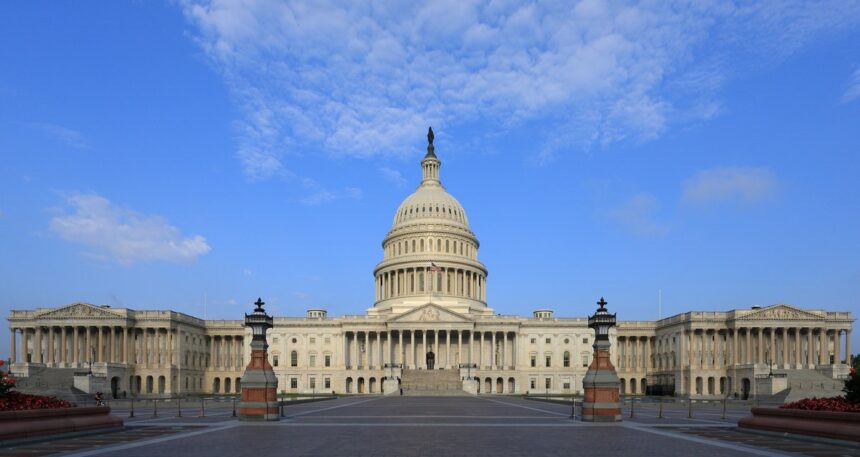
Lawmakers delivered an overwhelming 354–71 vote authorizing a sweeping five-year reauthorization for the U.S. Army Corps of Engineers, targeting catastrophic flood risks and inland waterway bottlenecks.
WASHINGTON — In a rare and resounding demonstration of cross-aisle unity weeks ahead of national elections, the House of Representatives on Friday evening passed the Water Resources Development and Infrastructure Modernization Act of 2026. The landmark legislation authorizes $48.2 billion over five fiscal years for the U.S. Army Corps of Engineers to execute critical rehabilitation across America’s rapidly deteriorating civil works network.
The final roll-call tally of 354 to 71 reflected commanding bipartisan consensus, bringing together farm-state conservatives seeking enhanced agricultural shipping corridors along the Mississippi River Basin and coastal representatives confronting severe storm-surge vulnerabilities along the Gulf and Atlantic shorelines. The measure now heads to the Senate, where leadership has pledged expedited floor consideration before the legislative session concludes.
Decades of deferred federal maintenance have brought hundreds of federally managed dams, commercial navigation locks, and flood mitigation levees to the edge of structural failure. According to the American Society of Civil Engineers, more than 4,000 national dams are currently classified as high-hazard structures in need of immediate capital remediation. The newly approved bill mandates that over 60 percent of newly appropriated civil works capital be directly channeled into physical asset restoration rather than new feasibility studies.
Targeted Capital for High-Hazard Dams and Commercial Waterways
Under the core funding architecture of the 2026 legislation, the Army Corps of Engineers will oversee targeted capital tranches addressing three primary operational priorities:
- Dam Safety and Spillway Overhauls ($18.4 Billion): Direct capital grants dedicated to stabilizing spillway gates, reinforcing earthen abutments, and dredging structural reservoirs across 38 states where historical sedimentation has severely degraded flood storage capacity.
- Inland Navigation Lock Rehabilitation ($14.6 Billion): Comprehensive replacement of 50-year-old mechanical lock chambers along the Ohio, Upper Mississippi, and Columbia River systems to eliminate recurring commercial freight delays that threaten agricultural exports.
- Coastal Storm Risk Management and Levee Certification ($15.2 Billion): Reinforced levee construction, barrier island restoration, and engineered sea wall construction in hurricane-vulnerable communities spanning Louisiana, Florida, Texas, and the Mid-Atlantic.
The measure integrates rigorous statutory requirements intended to curtail project delivery timelines. Historically, major federal water infrastructure projects have languished under multi-year environmental impact statements and bureaucratic inter-agency reviews. The 2026 bill codifies strict 18-month environmental review deadlines for all high-risk maintenance repairs, mirroring recent federal efforts to streamline domestic manufacturing and natural resource development.
Economic Stakes for Heartland Agriculture and Domestic Freight
The economic stakes underlying the legislation extend well beyond flood protection. America’s inland waterways serve as the primary commercial transit artery for the nation’s agricultural heartland, moving more than 60 percent of U.S. grain exports to deepwater international ports along the Gulf Coast. A single mechanical failure at a critical lock chamber on the Mississippi River can halt barge traffic for weeks, inflicting hundreds of millions of dollars in supply-chain losses on domestic farmers.
Speaking on the House floor during debate, House Transportation and Infrastructure Committee leaders highlighted the vital intersection between infrastructure resilience and national food security. By modernizing aging 600-foot lock chambers to accommodate modern 1,200-foot commercial tows, the bill is projected to cut commercial transit transit times by roughly 30 percent while lowering diesel consumption and carbon emissions across bulk freight freight networks.
The legislative breakthrough parallels ongoing federal initiatives aimed at revitalizing domestic supply chains and basic utility systems, echoing recent domestic spending priorities like the direct cost-relief disbursements announced for seniors and domestic industrial modernization mandates.
Fiscal Safeguards, Local Cost-Share Reforms, and Senate Outlook
To secure conservative backing, House negotiators incorporated stringent anti-waste provisions into Title IV of the bill. Independent inspector general audits will be mandated for all individual projects exceeding $250 million, and federal cost-share ratios for local drainage districts were restructured to prevent municipal cost overruns from defaulting back onto the federal taxpayer.
Furthermore, the legislation establishes an expedited deauthorization mechanism for obsolete civil works projects authorized decades ago that have failed to secure non-federal matching funds. By clearing tens of billions of dollars in dormant project authorizations off the federal books, the Army Corps can redirect its full engineering capacity toward the most pressing life-safety hazards.
Senate Environment and Public Works Committee leadership announced that bipartisan companion language will be brought directly to the Senate floor under unanimous consent agreements next week. With presidential advisers signaling that the White House will swiftly sign the measure into law, the legislation marks one of the most substantial federal civil works commitments enacted by Congress in more than a generation.
Sources & Official Documentation
- Legal Information Institute (Cornell Law School) – 33 U.S. Code § 2201 – Water Resources Development Authority, Civil Works Definitions, and Harbor Maintenance
- Legal Information Institute (Cornell Law School) – 33 U.S. Code § 408 – Taking Possession of, Use of, or Injury to Harbor or River Improvements by the U.S. Army Corps
- Electronic Code of Federal Regulations (eCFR) – 33 CFR Part 320 – General Regulatory Policies of the Corps of Engineers and Civil Works Review