

The coordinated federal rulemaking mandates that payment token issuers hold reserves exclusively in short-dated U.S. government debt and federally insured bank deposits.
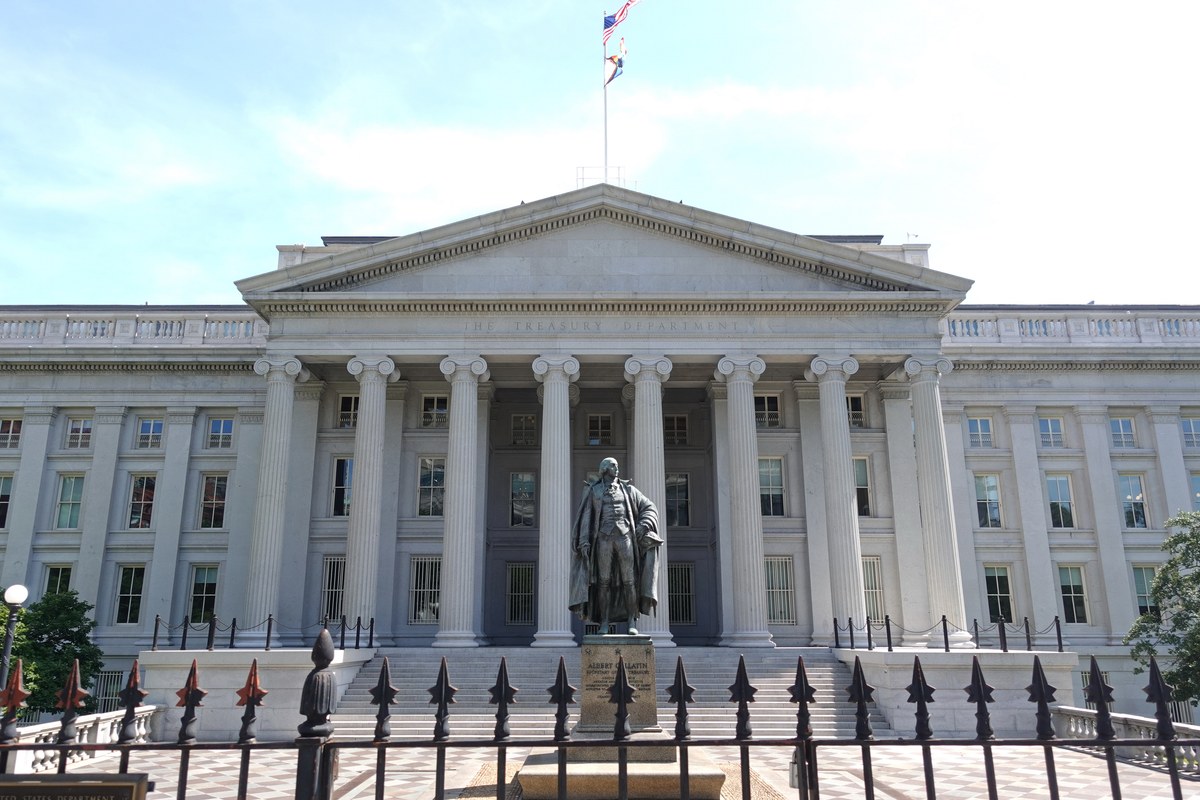
WASHINGTON — In the most significant federal regulatory intervention into the digital asset ecosystem to date, the Department of the Treasury and the Securities and Exchange Commission (SEC) on Friday jointly promulgated comprehensive regulatory standards governing United States dollar-pegged stablecoins. The landmark framework mandates that all commercial payment stablecoin issuers maintain 100 percent backing in ultra-short-term U.S. Treasury bills and submit to daily third-party reserve verifications.
The joint rulemaking, executed in consultation with the Federal Reserve Board and the Office of the Comptroller of the Currency (OCC), establishes a definitive federal prudential boundary for private digital tokens operating as monetary alternatives. Under the new rules, any entity issuing dollar-denominated digital tokens with a circulating market capitalization exceeding $1 billion must register under federal supervisory frameworks and hold primary reserves exclusively in physical cash deposits at insured institutions or Treasury bills maturing within 90 days.
The regulatory initiative represents the culmination of a multi-agency push to insulate the broader commercial banking system and retail consumers from liquidity runs, while cementing the U.S. dollar’s preeminent status as the undisputed global collateral asset in decentralized financial networks.
Core Provisions of the Joint Federal Framework
The newly announced regulatory architecture establishes four non-negotiable operational requirements for digital token issuers seeking lawful access to U.S. capital markets and payment rails:
- 100% High-Quality Liquid Asset Backing: Issuers are strictly prohibited from backing stablecoin tokens with commercial paper, unsecured corporate bonds, algorithmic rebasing mechanisms, or volatile cryptocurrency collateral. 100 percent of reserves must consist of direct cash or 90-day U.S. Treasury obligations.
- Daily Attestations and Monthly Public Audits: Issuers must publish daily cryptographically signed attestation reports verifying reserve ratios, accompanied by comprehensive monthly balance sheet audits conducted by independent public accounting firms registered with the PCAOB.
- Statutory Redemption Guarantees: Token holders are granted an express statutory right to redeem payment stablecoins directly with the issuer for legal tender at a one-to-one parity within twenty-four hours of a redemption request.
- Segregated Bankruptcy Protection: Reserve assets must be held in dedicated custodial trusts completely segregated from the issuer’s operating balance sheet, legally shielding token-holder collateral from corporate bankruptcy claims.
Federal regulators set an implementation deadline of March 31, 2027, granting existing major issuers like Tether and Circle a structured transitional window to align their balance sheet allocations and custodial agreements with the new mandates.
Strengthening Demand for U.S. Sovereign Debt
Beyond retail consumer protection, economic analysts highlighted the profound macroeconomic benefits the new rules offer to federal debt management. With the private stablecoin market already commanding more than $180 billion in global circulation, stablecoin issuers have quietly emerged as one of the largest buyers of short-term U.S. Treasury bills in the world—surpassing major sovereign foreign creditors including South Korea and Germany.
By legally restricting stablecoin reserve allocations strictly to short-dated government securities, the Treasury Department has effectively engineered a permanent, growing institutional buyer base for federal debt. Financial analysts note that as global stablecoin adoption expands across international cross-border trade, structural demand for U.S. debt securities will help anchor short-term borrowing yields even amid elevated federal borrowing requirements.
The economic stabilization policy dovetails with ongoing fiscal enforcement measures enacted across the administration, mirroring recent Treasury financial oversight rules and taxpayer transparency protections enacted across major entitlement and insurance programs.
Cryptocurrency Industry and Congressional Reaction
Reaction from the financial technology sector was broadly receptive, with major compliant issuers praising the joint standards for providing regulatory certainty that has been absent for nearly a decade. Industry leaders noted that formal regulatory sanction will enable major commercial banks and institutional investment managers to integrate digital dollar tokens into traditional settlement and clearing networks without fear of sudden enforcement actions.
On Capitol Hill, leaders of the House Financial Services Committee commended the agencies for establishing robust guardrails while urging lawmakers to codify the standards into comprehensive statutory legislation during the upcoming 2027 congressional session. By locking in daily reserve transparency and pure sovereign backing, federal regulators have charted a path that integrates digital currency into the American financial architecture while safeguarding systemic stability.
Sources & Official Documentation
- Legal Information Institute (Cornell Law School) – 12 U.S. Code § 3907 – Capital Adequacy and Reserve Standards for Insured Institutions and Asset Custodians
- Legal Information Institute (Cornell Law School) – 15 U.S. Code § 78m – Securities Exchange Act of 1934: Periodical and Daily Financial Disclosure Reports
- Electronic Code of Federal Regulations (eCFR) – 17 CFR Part 240 – General Rules and Regulations Under the Securities Exchange Act of 1934


