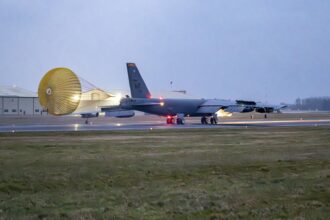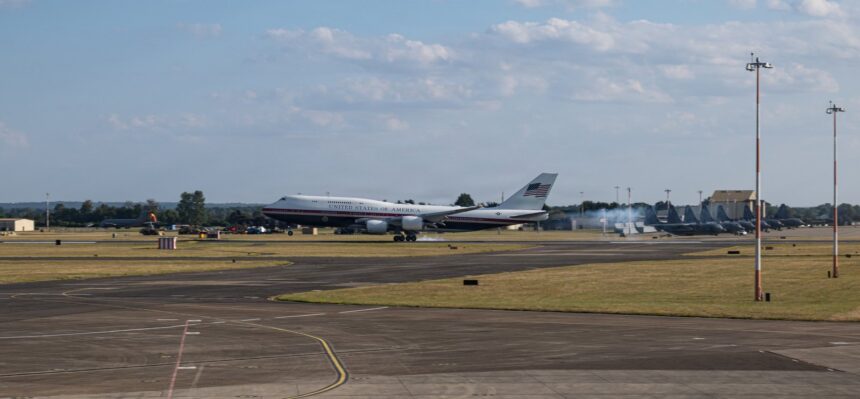
The administration removed the network from the Air Force One rotation for trips to Texas and Oklahoma, escalating a high-profile constitutional dispute over presidential press access.
WASHINGTON — The contentious relationship between the White House and the national political press corps escalated into a direct constitutional standoff on October 1, as the administration blocked CNN from participating in the rotating presidential travel pool aboard Air Force One for President Donald Trump’s official travel to Texas and Oklahoma.
The exclusion marked the second time in less than seven days that the network was barred from traveling with the President, following a similar exclusion during a presidential visit to Tennessee the prior weekend. The move occurred despite a recent federal court order issued by U.S. District Judge Timothy Kelly, which granted a temporary restraining order requiring the administration to restore press access credentials to CNN, MS NOW, and Politico.
CNN had originally been scheduled as the primary television pool representative for the October 1 itinerary in a rotation schedule published by the White House on September 27. However, updated guidance transmitted late Wednesday night abruptly removed the network. With no alternate television network stepping into the pool slot, the President’s arrival and public events in Durant, Oklahoma proceeded without standard primary television pool camera coverage.
The Legal Loophole: Campus Access vs. Presidential Travel
The administration’s decision exploits an unresolved jurisdictional distinction in Judge Kelly’s preliminary ruling. While the district court ordered the White House to reinstate the physical hard passes granting reporters entry to the White House grounds and the James S. Brady Press Briefing Room, the order did not explicitly mandate inclusion in presidential motorcades or aboard Air Force One:
- Physical Campus Access: The court found that revoking hard passes without procedural due process violated longstanding D.C. Circuit precedent established in Sherrill v. Knight.
- Travel Discretion: Administration attorneys contend that travel aboard Air Force One and participation in tight travel pools represent executive discretion rather than an absolute First Amendment entitlement.
- Emergency Motions: Counsel representing the affected news organizations filed emergency motions on October 1 asking Judge Kelly to clarify that the injunction extends to official pool travel rotations managed by the White House Correspondents’ Association (WHCA).
White House Press Corps Solidarity and Pushback
The White House Correspondents’ Association issued a strong statement condemning the administration’s actions, emphasizing that the rotating pool system exists to ensure that independent journalists can provide real-time reporting on the President’s movements for the entire American public.
“The presidential press pool is not a luxury or a favor granted at the whim of the administration; it is an indispensable democratic institution that guarantees transparency and public accountability,” the WHCA stated. “Excluding a designated pool outlet undermines the integrity of the historical record and violates established protocols that have governed White House coverage across both political parties for decades.”
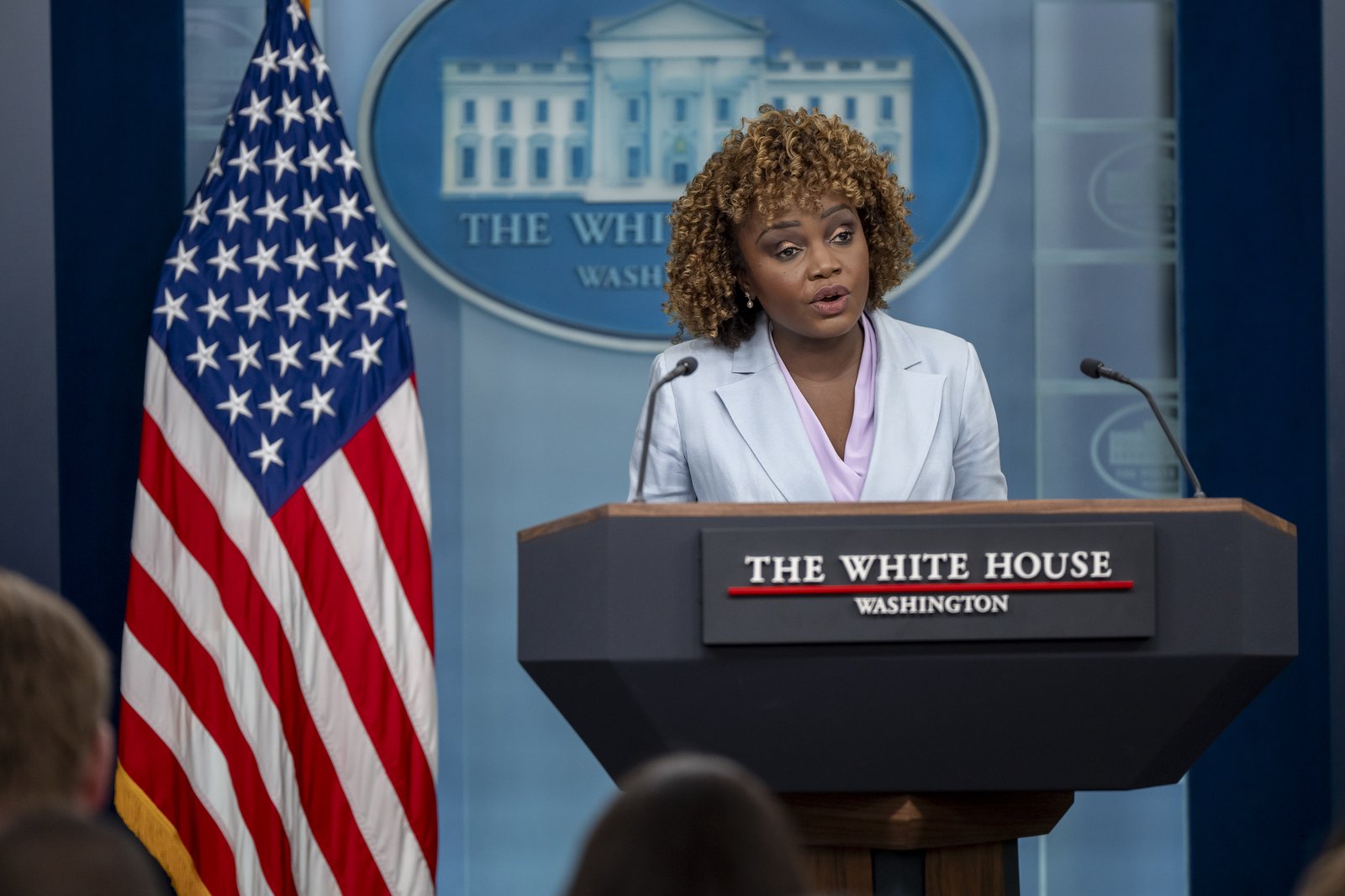
White House officials responded forcefully, asserting that the President retains the constitutional right to determine which media entities are permitted aboard military aircraft operated by the executive branch. Administration representatives reiterated accusations that major news networks have engaged in biased, hostile reporting that justifies operational restrictions during official travel.
Campaign Context Ahead of the November Midterms
The media confrontation unfolds against the backdrop of aggressive campaigning as the November midterm elections approach. President Trump’s travel to the Choctaw Nation in Durant, Oklahoma is part of an intensive schedule of regional rallies designed to mobilize conservative base turnout in key legislative races.
Confrontations with legacy media outlets have long served as an effective political rallying cry for the President’s political base. By openly challenging mainstream television networks over press pool assignments, the administration reinforces its populist framing, contrasting its direct digital communications channels with traditional media intermediaries.
Upcoming Court Deadlines and Judicial Scrutiny
Judge Kelly has ordered the Department of Justice to submit a formal response to the media coalition’s emergency travel motion by Friday, October 3. The court is expected to hold a hearing early next week to determine whether the White House’s travel exclusions constitute constructive contempt of the court’s preliminary restraining order.
The outcome will establish critical constitutional precedent regarding the boundaries of presidential authority over media access, determining whether the federal judiciary can dictate who flies aboard Air Force One or whether the executive branch retains autonomous discretion over presidential travel operations.
Historical Precedents: The Presidential Press Pool and Democratic Accountability
The institution of the presidential press pool dates back to the aftermath of the assassination of President John F. Kennedy in 1963, when news organizations and the Secret Service established formal protocols to guarantee that a representative cohort of reporters is constantly positioned alongside the commander-in-chief during domestic and foreign travel. The pool system relies on an institutional compact: competing news outlets share the operational expense and logistics of travel, and in return, agree to immediately distribute unedited reports, pool dispatches, and audio-visual feeds to the entire international press corps.
Legal historians note that while past administrations of both parties have sparred with individual correspondents or altered seating arrangements, excluding a credentialed network from a scheduled traveling pool represents a profound departure from longstanding governing norms. As the dispute returns to federal court, Judge Kelly’s ruling will determine whether access to presidential travel enjoys constitutional protection under the First Amendment or remains entirely at the pleasure of the White House press office.
Sources & Official Documentation
- CourtListener / Federal Court Docket – Cable News Network, Inc. v. Trump (No. 1:18-cv-02610) Preliminary Injunction Memorandum & Order
- Legal Information Institute (Cornell Law) – U.S. Constitution, Amendment I – Freedom of Speech and Freedom of the Press Judicial Doctrine
- Oyez Supreme Court Judicial Database – New York Times Co. v. United States Precedent on Prior Restraint and Government News Access