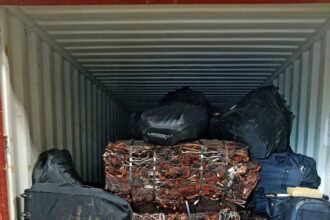
The multi-energy non-intrusive scanning systems penetrate dense industrial bulk freight at full track speed, detecting concealed precursor chemicals and subterranean rail contraband.
WASHINGTON — The Department of Homeland Security (DHS) and U.S. Customs and Border Protection (CBP) on Friday declared full operational capability for a multi-million-dollar network of advanced artificial intelligence non-intrusive inspection (NII) portals positioned across the ten busiest commercial freight rail crossings along the U.S.–Mexico border.
The high-throughput scanning gantries, constructed directly straddling active international freight rail lines in Eagle Pass, Laredo, El Paso, Brownsville, and Nogales, represent a major technological leap in federal interdiction capabilities. Powered by high-energy multi-view X-ray imaging combined with automated machine learning density algorithms, the portals scan fully loaded 60-to-100-car freight trains moving at operational speeds of up to 12 miles per hour without requiring trains to decouple or stop.
The deployment addresses a long-standing vulnerability exploited by transnational criminal cartels, who have increasingly shifted narcotics smuggling operations away from passenger vehicles into dense industrial rail shipments of auto parts, grain, and chemical tankers traveling directly into Midwestern distribution hubs.
Multi-Energy Radiography and Anomaly Detection Algorithms
Historically, federal customs officers inspecting incoming freight railcars relied on manual physical spot checks, canine detection teams, and low-energy backscatter imaging that struggled to penetrate heavily shielded steel rail chassis, double-hulled tanker cars, and dense agricultural bulk commodities.
The newly deployed scanning portals utilize 9-megaelectronvolt (MeV) linear accelerator sources capable of penetrating more than sixteen inches of solid commercial steel. As each railcar passes through the gantry, dual-energy detectors measure how materials absorb different X-ray spectrums, enabling the system’s software to automatically differentiate between low-density organic substances (such as synthetic opioids, methamphetamine, and narcotics precursors) and high-density industrial steel or commercial auto parts.
“Transnational cartels operate like sophisticated international logistics corporations, and they have attempted to hide illicit fentanyl within the massive volume of legitimate cross-border commerce,” senior border enforcement officials stated during a media briefing in Laredo. “With these high-energy AI portals, our officers can see straight through reinforced steel bulkheads and detect anomalies in seconds, stopping deadly synthetic poisons before they reach American rail yards.”
Statutory Inspection Authorities and Trade Flow Protection
The operational framework executes broad border search authorities established under the Tariff Act of 1930 (19 U.S. Code § 1467) and federal controlled substances import statutes (21 U.S. Code § 952). Under federal law, customs officers maintain plenary authority to inspect all merchandise, rail conveyances, and commercial shipping containers entering the customs territory of the United States without requiring individual judicial search warrants.
Beyond drug interdiction, the automated scanning technology preserves vital supply chain fluidity. More than $350 billion in bilateral trade traverses southern border freight rail lines annually, supplying American automotive assembly plants in Michigan, Ohio, and Indiana with engines, stampings, and electronics. Previous manual rail inspections created extensive commercial bottlenecks that snarled freight corridors and triggered temporary trade embargoes.
By conducting automated volumetric analysis in under three minutes per train, CBP can clear legitimate commercial cargo rapidly while immediately shunting suspicious railcars into specialized inspection spurs for targeted physical canine and hazmat verification under 19 CFR Part 162 regulations.
Integrating Rail Interdiction Into Border Surveillance Grids
The freight rail systems integrate directly into DHS’s broader border defense infrastructure, complementing the recent expansion of biometric commercial verification systems across major land ports of entry and federal counter-drone grid deployments.
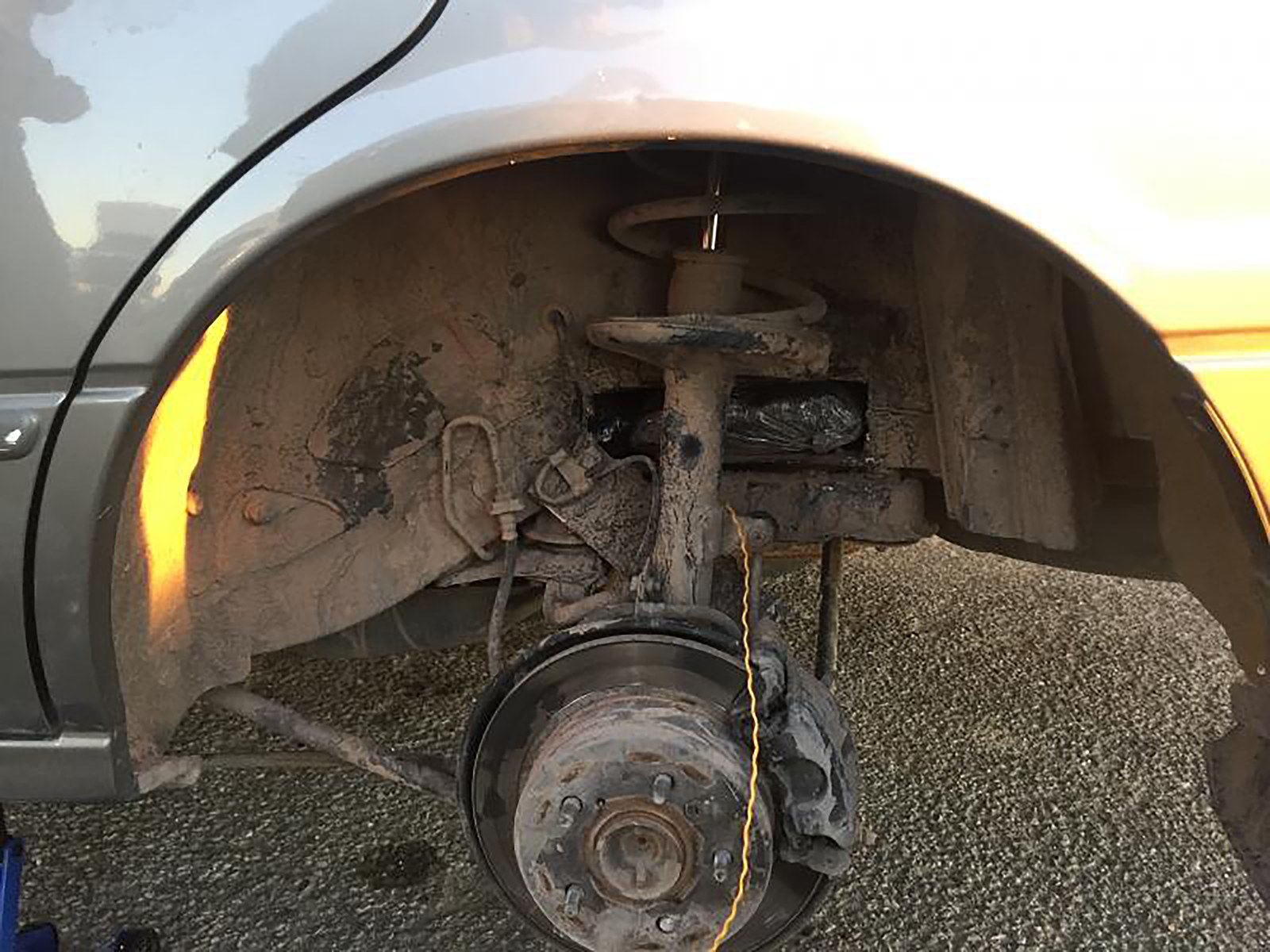
According to preliminary operational metrics released by CBP, initial testing of the portal systems during pilot operations across the Eagle Pass and Nogales corridors led to the interdiction of over 4,200 pounds of synthetic opioid precursors and 1,800 pounds of crystal methamphetamine concealed inside hollowed railcar draft gear assemblies and false-bottom grain hoppers.
DHS confirmed that an additional six rail inspection portals are currently under construction along northern border crossings in Michigan, Minnesota, and Washington state, scheduled for deployment in early 2027 to establish comprehensive continental freight rail defense perimeter coverage.
Class I Railroad Cooperation and Chemical Precursor Interdiction
Deploying multi-energy portal gantries required close public-private coordination between federal homeland security officials and Class I freight rail operators, including BNSF Railway, Union Pacific, and Canadian Pacific Kansas City (CPKC). Railroad executives initially voiced concerns that federal inspection mandates would snarl international rail corridors and delay cross-border automotive supply chains.
However, operational testing demonstrated that automated high-speed scanning systems eliminate manual physical bottlenecks, clearing compliant freight trains in under three minutes while isolating suspicious railcars without interrupting main-track rail traffic. Furthermore, the high-energy imaging systems are specifically tuned to identify low-density chemical precursor solvents—such as piperidone and benzylfentanyl—disguised inside industrial rail tankers, cutting off the synthetic drug supply chain before chemicals reach illicit domestic labs.
Sources & Official Documentation
- Legal Information Institute (Cornell Law School) – 19 U.S. Code § 1467 – Tariff Act of 1930: Special Inspection, Examination, and Search Authorities
- Legal Information Institute (Cornell Law School) – 21 U.S. Code § 952 – Controlled Substances Import and Export Act: Importation of Controlled Substances
- Electronic Code of Federal Regulations (eCFR) – 19 CFR Part 162 – Customs and Border Protection Inspection, Search, and Seizure Regulations