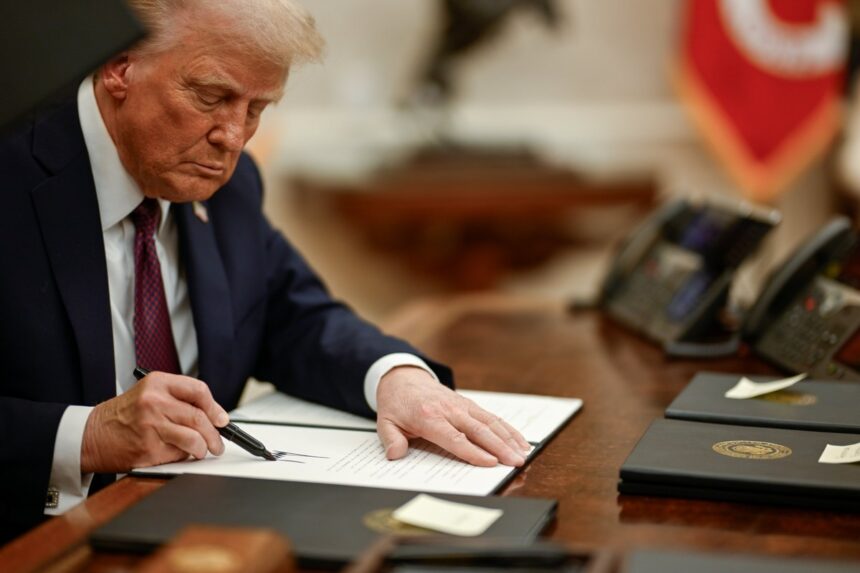
The sweeping presidential directive halts non-essential civil service appointments immediately and gives the budget office 90 days to identify departments suitable for relocation to the American interior.
WASHINGTON — President Donald Trump on Saturday signed a sweeping executive order instituting an immediate, government-wide freeze on the hiring of non-essential civilian personnel across the executive branch. The order simultaneously directs the Office of Management and Budget (OMB) to formulate a binding relocation blueprint to disperse federal regulatory bureaus out of the Washington, D.C., metropolitan corridor and into regional American hubs.
The directive represents one of the most aggressive administrative restructurings of the federal bureaucracy in modern presidential history. Invoking presidential authority under Title 5 of the United States Code governing executive civil service management, the order instructs department heads to halt all active recruitment postings, cancel pending non-essential conditional offers, and permit civilian staffing attrition to naturally reduce the overall size of the federal workforce.
Specific national security, border defense, immigration enforcement, and frontline clinical positions within the Veterans Health Administration are strictly exempted from the freeze. However, standard policy, administrative, and regulatory desks across domestic agencies—including the Department of the Interior, the Environmental Protection Agency, the Department of Education, and the Department of Energy—face an immediate suspension of new personnel onboarding.
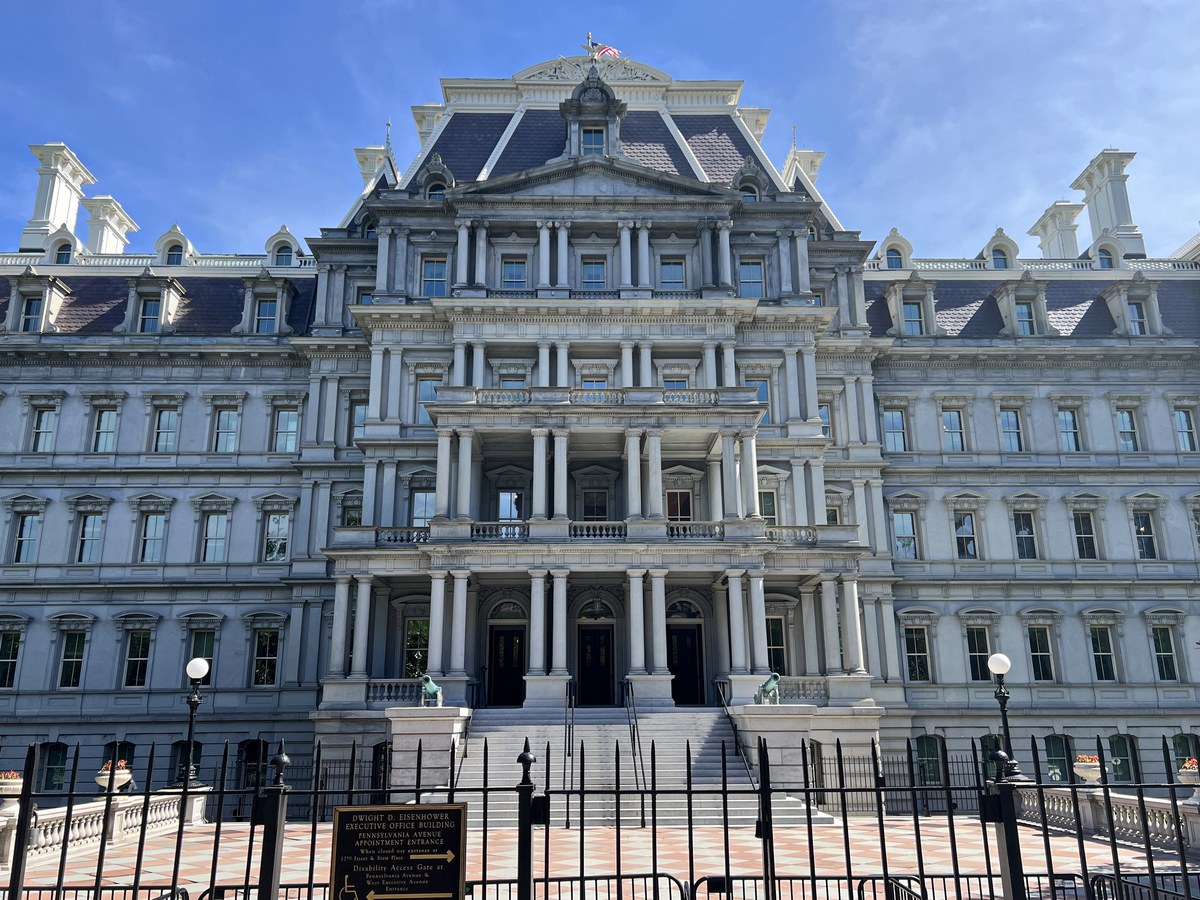
The Mandate to Disperse the Bureaucracy Outside the Beltway
Beyond the immediate hiring pause, the executive order’s most transformative component is Section 4, which tasks OMB Director Russell Vought and the General Services Administration (GSA) with executing a structural decentralization study within 90 days. The mandate requires the administration to identify at least eight major departmental operational bureaus that can be permanently relocated to Midwestern, Southern, and Rocky Mountain states.
“For generations, a permanent administrative class has consolidated authority inside a ten-mile bubble in Washington, completely detached from the hard-working taxpayers they are supposed to serve,” President Trump stated during the signing ceremony in the Oval Office. “By placing these agencies directly into the communities most impacted by their decisions—where land costs are lower, living costs are reasonable, and practical common sense prevails—we will dismantle the swamp and make government accountable again.”
Potential relocation targets outlined by administration policy advisers include moving the Bureau of Land Management headquarters back to Grand Junction, Colorado, relocating the Agricultural Research Service to Iowa and Missouri, and moving key energy oversight divisions closer to active extraction basins in Texas and Wyoming. The administration argues that decentralizing federal personnel will slash hundreds of millions of dollars in prime Washington commercial real estate lease costs while infusing high-skilled employment into regional heartland economies.
Legal Foundations and Civil Service Union Pushback
The directive immediately triggered furious blowback from public sector employee unions, who promised immediate legal challenges in federal district court. Representatives for the American Federation of Government Employees (AFGE) and the National Treasury Employees Union (NTEU) condemned the order as an unlawful effort to circumvent congressional appropriations and induce involuntary resignations among career civil servants unwilling or unable to uproot their families.
Union legal strategists argue that sweeping agency relocations require explicit congressional authorization under statutory agency organic acts. However, Justice Department legal counsel issued a formal memorandum affirming that executive reorganization plans and the geographic disposition of personnel fall squarely within executive discretion under 5 U.S.C. § 3301 and presidential managerial authorities confirmed in landmark Supreme Court precedents.
The civil service reform builds directly upon earlier administrative cost-reduction strategies pursued by the administration, such as the reallocation of unused administrative reserves to taxpaying citizens and the rigorous reassessment of federal grant programs across regional districts.
Congressional Clash and the Battle Over Appropriations
On Capitol Hill, the executive order quickly fractured lawmakers along partisan lines. Republican committee leaders lauded the initiative as a overdue measure of fiscal discipline, arguing that the federal government added tens of thousands of redundant remote and administrative positions over the past four years that added to the national debt without improving public service delivery.
Democratic lawmakers from Virginia and Maryland, where hundreds of thousands of federal civilian employees reside, vowed to attach legislative riders to pending appropriations packages prohibiting the expenditure of federal funds for the physical relocation of agency headquarters. They warned that abrupt transfers would gut institutional expertise and disrupt essential regulatory workflows.
With OMB instructed to deliver its preliminary agency target list by mid-December, the executive order ensures that the geographic footprint and operational size of the federal workforce will remain a defining battleground in the closing weeks of the 2026 campaign.
Sources & Official Documentation
- Legal Information Institute (Cornell Law School) – 5 U.S. Code § 3301 – Civil Service: Rules for Admission of Individuals into the Civil Service and Executive Powers
- Legal Information Institute (Cornell Law School) – 31 U.S. Code § 501 – Office of Management and Budget: Statutory Organization, Functions, and Agency Coordination
- Electronic Code of Federal Regulations (eCFR) – 5 CFR Part 330 – Recruitment, Selection, and Placement in the Competitive Federal Civil Service