
OPINION | Updated August 21, 2026
Government officials and optimistic economists frequently point to headline economic statistics to argue that the inflation crisis has passed. But real-world data paints a very different picture. The Commerce Department’s latest retail sales report showing a 0.6% contraction in July—the sharpest monthly drop in over a year—proves that American families are still feeling the heavy weight of cumulative price increases.
The Walmart Warning Signal
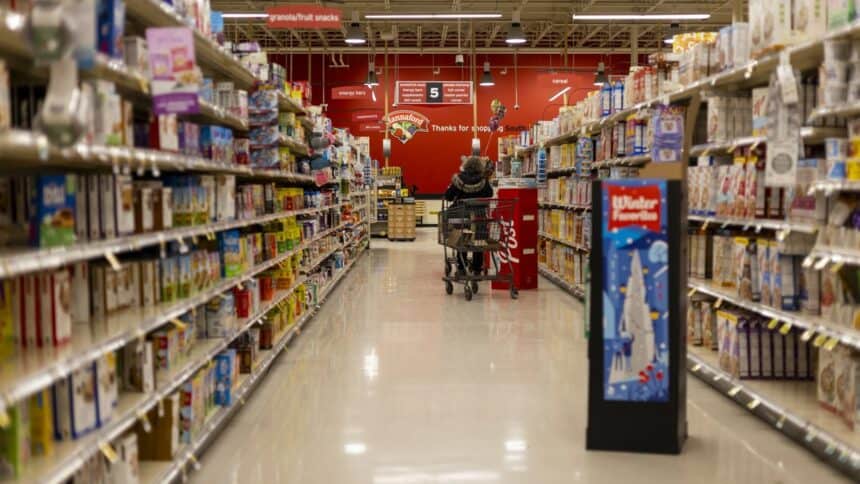
When economists want to measure true consumer health, they look at Walmart. The nation’s largest retailer reported its slowest domestic sales growth in six years on August 20, warning that shoppers across all income brackets are cutting back on discretionary goods and trading down to generic brands just to cover groceries and utilities.
The slowdown was sharpest in electronics, appliances, and home goods. When everyday expenses like groceries, car insurance, and gasoline tick higher, families delay replacing appliances and buying new vehicles.
This reality mirrors ongoing pressures in the housing market, where high borrowing costs have kept mortgage rates elevated around 6.65%, shutting millions of first-time buyers out of homeownership.
Cumulative Inflation vs. Rate of Change
Washington policymakers often celebrate when the annual inflation rate slows from 7% to 3%. But for the family buying groceries in Des Moines or filling up their gas tank in Dallas, prices did not go back down—they simply stopped rising as quickly on top of a 25% cumulative surge.
Wage growth in many sectors has failed to keep pace with the compounding cost of housing, energy, and food. When credit card balances reach record highs and personal savings dwindle, consumer spending eventually contracts.
The solution requires pro-growth, pro-energy policies that increase supply, lower regulatory costs, and eliminate wasteful federal spending that feeds structural inflation.
Why This Matters
Consumer spending drives more than two-thirds of the American economy. A pullback in retail demand signals that household financial resilience is eroding, increasing the risk of an economic downturn if energy prices and borrowing costs remain elevated.
Sound economic stewardship requires policies that restore the purchasing power of the dollar and encourage business capital investment rather than expanding government programs.
What to Watch
Watch the upcoming Federal Reserve Jackson Hole symposium for signals on interest rate trajectory, third-quarter back-to-school consumer spending reports, and regional gasoline price indices.
Sources
- U.S. Census Bureau: Advance Monthly Sales for Retail and Food Services
- Bureau of Labor Statistics: Consumer Price Index and Purchasing Power Data
- Federal Reserve Board: Household Debt and Credit Report
Patriot Raw welcomes factual corrections. Submit or review a correction.
Sources & Data References
- U.S. Census Bureau: Advance Monthly Sales for Retail and Food Services Report (July Data)
- U.S. Bureau of Labor Statistics: Consumer Price Index Summary Breakdown
- Walmart Inc. Investor Relations: Q2 FY2027 Corporate Financial Filing and Earnings Conference Call Statements
Reading the Data Honestly
A 0.6 percent monthly contraction in retail sales is not by itself catastrophic — monthly retail figures fluctuate regularly and one month does not establish a trend. What makes the July figure significant, however, is its context: it arrived during a period when official inflation figures had been trending lower, and the Federal Reserve and White House had repeatedly argued that the consumer economy remained resilient. A pullback in discretionary spending categories — clothing, electronics, restaurants — while essentials like gas stations and grocery stores held flat tells a specific story about how households are managing tighter budgets. Families are not stopping all spending; they are triaging it.
The Gap Between Headline Numbers and Household Reality
Macroeconomic statistics are averages, and averages by definition conceal the distribution of who is experiencing what. When the average wage earner is described as having kept pace with inflation, that average includes both high-income households whose spending power has genuinely recovered and lower and middle-income households whose essential costs — rent, food, insurance, utilities — have risen faster than their wages. The retail sales contraction likely reflects the lower and middle quintiles of the income distribution beginning to exhaust the financial cushions that kept their spending elevated in the immediate post-pandemic period.
What This Means for Policy
From a policy perspective, the July retail data creates a tension for both the Federal Reserve and the administration. For the Fed, softening consumer spending reduces inflationary pressure from the demand side, potentially strengthening the case for rate cuts — but only if the deceleration is orderly rather than a harbinger of broader contractionary momentum. For the administration, retail weakness undercuts the political narrative of a strong consumer economy while simultaneously providing political cover to push for energy price relief and regulatory rollbacks intended to reduce household costs.