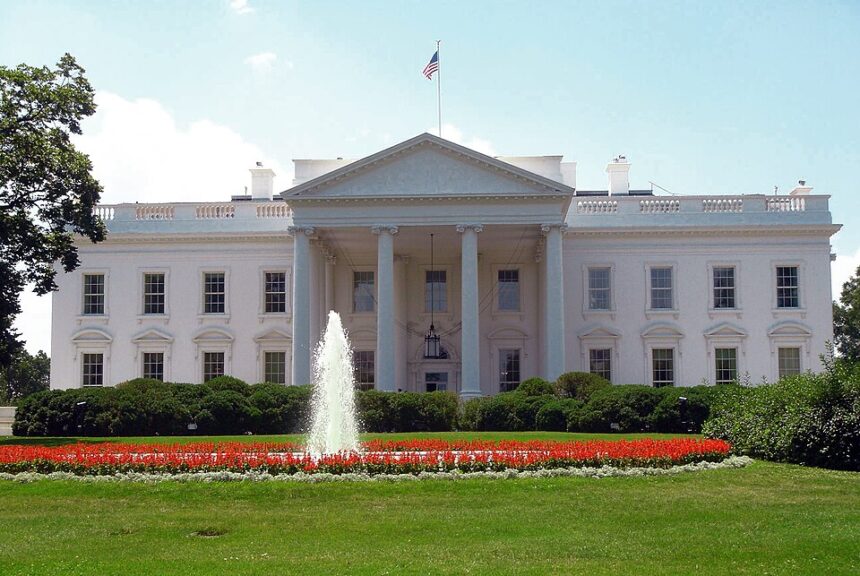
WASHINGTON — The White House Council on Environmental Quality (CEQ) and the Department of Energy on Friday announced a comprehensive federal permitting reform package aimed at dramatically reducing review timelines for interstate electricity transmission lines, pipeline interconnections, and domestic energy production facilities.
The revised regulations, issued under National Environmental Policy Act (NEPA) authorities, establish expedited categorical exclusions for energy infrastructure projects located along pre-existing federal rights-of-way and brownfield sites. Administration officials stated the overhaul is designed to eliminate multi-year bureaucratic delays that have stalled critical grid modernization projects across the American heartland.
Under the updated regulatory framework, federal agencies must adhere to a strict 18-month ceiling for Environmental Assessments and a 24-month maximum for complex Environmental Impact Statements. Previous federal reviews frequently stretched past four to seven years, driving up capital costs and discouraging private investment in vital energy corridors.
The directive also designates the Department of Energy as the primary lead agency for interstate electric transmission lines spanning multiple federal jurisdictions, preventing conflicting decisions between the Bureau of Land Management, the U.S. Forest Service, and regional Army Corps of Engineers districts.
“American energy dominance and industrial expansion depend on an electric grid capable of delivering reliable baseload power,” the White House energy policy team said in a statement accompanying the release. “By cutting duplicative paperwork and establishing clear agency deadlines, this administration is ensuring critical infrastructure can be built on American soil without decades of litigation.”
The permitting reform initiative builds on executive directives designed to bolster strategic domestic industries, including recent Section 232 tariffs to shield defense supply chains and commercial aerospace infrastructure. As domestic electricity demand surges at its fastest pace in three decades, driven by advanced manufacturing facilities, artificial intelligence data centers, and heavy industrial reshoring. Grid operators in the Mid-Atlantic, Texas, and the Midwest have repeatedly warned that existing transmission bottlenecks threaten long-term grid reliability unless new capacity is rapidly deployed.
Industry leaders and energy trade associations praised the procedural changes, noting that clear timelines provide necessary certainty for multi-billion-dollar private capital commitments. Critics from national environmental groups signaled potential legal challenges, arguing that accelerated review schedules could limit local public comment periods.
The administration’s administrative actions parallel ongoing bipartisan negotiations on Capitol Hill, where lawmakers are also addressing broader regulatory deadlines such as the Department of the Interior’s oil and gas leasing rollback. Lawmakers on the Senate Energy and Natural Resources Committee have been drafting comprehensive statutory permitting reform legislation, with supporters arguing that executive branch rules must be codified into permanent federal statute to prevent reversal by future administrations.
The new CEQ guidelines will officially take effect following a 30-day implementation period across regional agency offices, with the first wave of priority transmission corridors scheduled for designation by mid-autumn.
Sources
- Executive Office of the President / CEQ: CEQ Final Guidance on NEPA Modernization & Electric Transmission Permitting
- U.S. Department of Energy: Grid Deployment Office Transmission Facility Financing and Permitting Directives
- Federal Register: Categorical Exclusions for Domestic Grid Modernization (40 CFR Parts 1500-1508)
- Associated Press / Reuters: Bipartisan Permitting Reform and Clean Infrastructure Analysis