A federal judge in New York ruled that the State Department’s blanket suspension of immigrant visa processing for 75 nations violated federal law prohibiting nationality-based discrimination.
NEW YORK — A federal judge struck down the Trump administration’s blanket suspension of immigrant visa processing across 75 countries, declaring the sweeping policy contrary to federal immigration law and ordering consular officers to immediately resume individualized adjudications.
U.S. District Judge Jeannette A. Vargas of the Southern District of New York ruled that the indefinite freeze, implemented by Secretary of State Marco Rubio, exceeded executive statutory authority under the Immigration and Nationality Act of 1965.
The Court’s Statutory Analysis and Ruling
The administration had justified the 75-country pause by asserting that applicants from the specified nations presented an elevated statistical risk of becoming a “public charge” reliant on government benefit programs.
In her 42-page memorandum opinion, Judge Vargas concluded that Section 1152(a)(1)(A) of federal immigration law explicitly prohibits discrimination based on nationality or place of birth when issuing immigrant visas.
“While the executive branch maintains broad authority to evaluate individual applicants, it may not establish categorical, nationality-based disqualifications that Congress explicitly barred by statute,” Judge Vargas wrote in the decisive order.
The court emphasized that while Congress granted the president discretion under Section 212(f) to suspend the entry of specific classes of aliens, that power does not supersede specific non-discrimination mandates governing formal consular visa issuance.
Legal scholars noted that the decision draws a clear legal line between presidential border entry proclamations and statutory consular processing standards established by Congress.
Legal Battle and Class-Action Scope
The lawsuit, CLINIC v. Rubio, was brought by a coalition of legal advocacy groups representing thousands of family-sponsored and employment-based visa applicants whose files were indefinitely frozen at foreign consulates.
The ruling formally vacates the administration’s policy guidance and instructs the State Department to restore standard case-by-case vetting protocols, effectively invalidating visa denials that were based solely on the categorical suspension.
The decision represents the latest major judicial check on federal administrative actions, following legal challenges surrounding federal executive directives and administrative authority.
Plaintiffs demonstrated in court filings that thousands of qualified applicants had already completed background checks, medical clearances, and consular interviews before having their final document processing halted without individual cause.
Attorneys representing family reunification petitioners emphasized that prolonged administrative delays had imposed substantial emotional and financial hardships on American citizens awaiting relatives abroad.
Justice Department Prepares Appeal
Justice Department attorneys are preparing an emergency motion for a stay pending appeal to the U.S. Court of Appeals for the Second Circuit, arguing that foreign visa administration falls squarely within the president’s constitutional foreign affairs purview.
Government lawyers contended that temporary procedural pauses during policy reviews are routine administrative tools necessary to protect public interest standards.
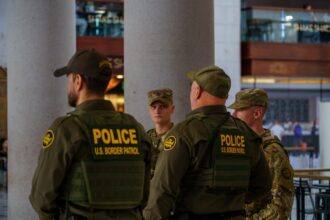
Border security agencies, including the CBP and federal port inspectors, continue to maintain existing border checkpoint screening protocols while consular posts adjust to the ruling.
Administration officials maintained that rigorous screening criteria are vital to preventing strain on domestic social safety nets and ensuring incoming residents possess verifiable financial sponsorship.
What Happens Next
Consular affairs offices in affected embassies must formally acknowledge the court order within seven business days and provide compliance schedules for processing backlogged immigrant visa petitions.
The Second Circuit Court of Appeals is expected to receive the government’s emergency stay request early this week, determining whether the freeze remains lifted while appellate litigation proceeds.
Immigration law specialists noted that previous circuit court rulings have consistently required executive agencies to follow explicit statutory guidelines established by Congress when administering formal immigrant visa quotas.
State Department officials confirmed that consular guidance cables will be transmitted to diplomatic posts worldwide outlining updated adjudication procedures in accordance with the district court’s mandate.
Sources
- U.S. District Court for the Southern District of New York: Memorandum Opinion and Injunction Order in CLINIC v. Rubio
- National Immigration Law Center (NILC): Federal Court Strikes Down Unlawful 75-Country Visa Processing Ban
- Washington Post: Judge Vacates Trump Administration Immigrant Visa Pause for 75 Nations
- PBS NewsHour: Federal Judge Orders State Department to Resume Immigrant Visa Processing