
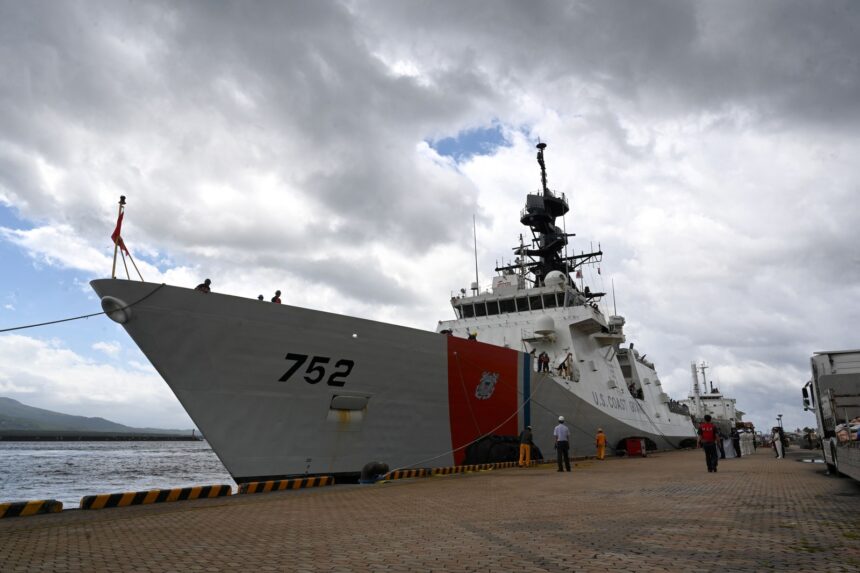
Tactical boarding teams seized 8,200 pounds of uncut narcotics worth $125 million aboard the custom-built 55-foot semi-submersible vessel in international waters.
SAN DIEGO — United States Coast Guard Tactical Law Enforcement Teams (TACLET), operating in joint coordination with the Drug Enforcement Administration (DEA) and Joint Interagency Task Force South, intercepted a custom-engineered, 55-foot low-profile semi-submersible vessel—”narco-submarine”—in the Eastern Pacific Ocean, seizing more than four tons of pure cocaine and detaining four transnational cartel operatives.
Command officials from the Eleventh Coast Guard District confirmed on Wednesday that the nighttime boarding operation prevented approximately 8,200 pounds of uncut hydrochloride cocaine—carrying an estimated wholesale street value exceeding $125 million—from reaching North American distribution hubs via Mexican coastal staging ports.
The stealthy fiberglass-and-steel vessel was constructed in clandestine mangrove shipyards along the South American littoral and engineered to ride nearly flush with the ocean surface, utilizing water-cooled exhaust baffles and lead-shielded engine compartments to minimize its thermal and radar cross-section against maritime patrol aircraft.
High-Seas Interdiction Under the Maritime Drug Law Enforcement Act
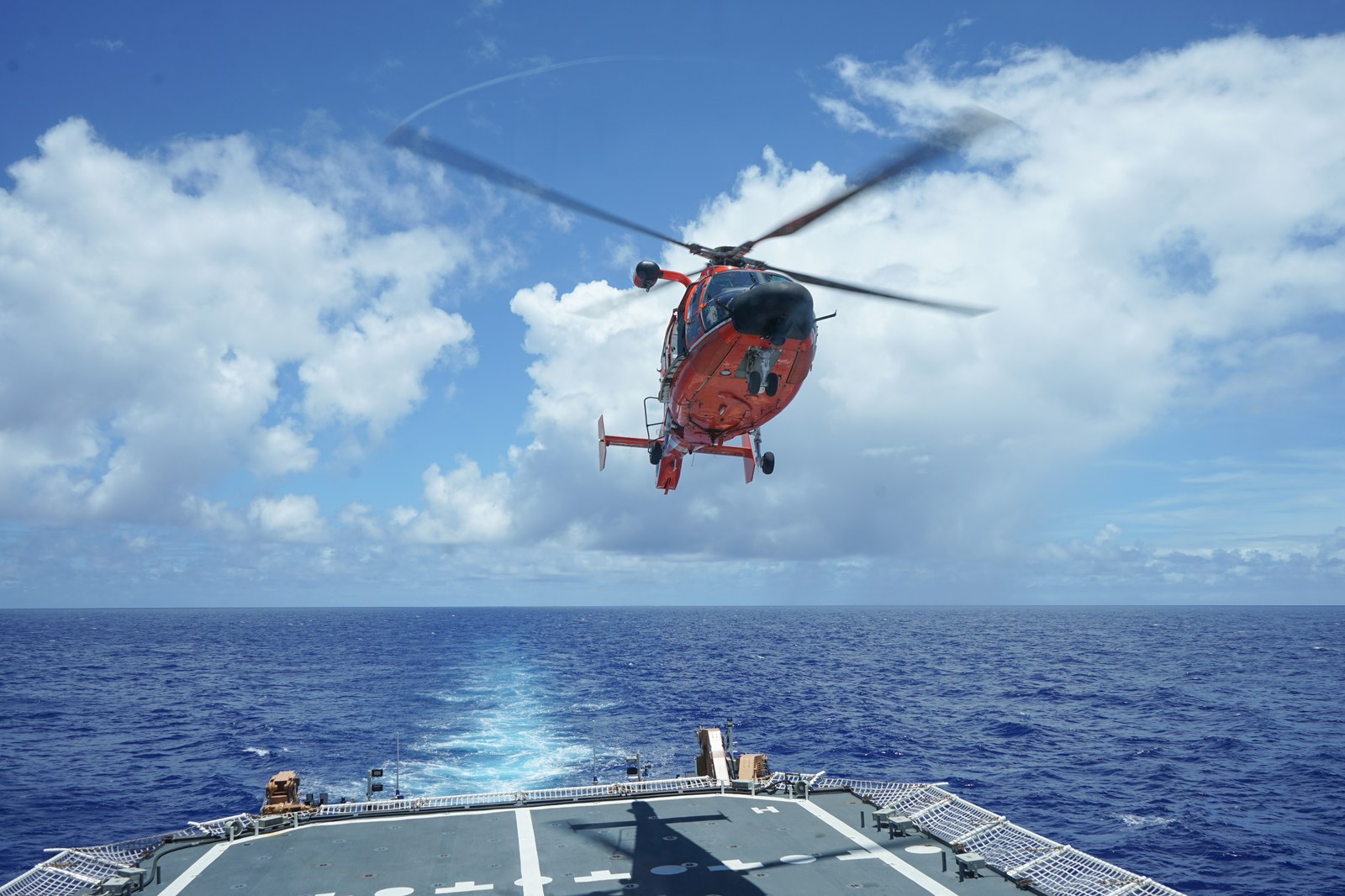
The high-risk boarding operation was executed in international waters under statutory jurisdiction established by the Maritime Drug Law Enforcement Act (46 U.S. Code § 70503) and Coast Guard maritime law enforcement regulations codified in 33 CFR Part 2. After an airborne maritime patrol aircraft detected a faint wake anomaly using synthetic aperture radar, a National Security Cutter launched an over-the-horizon interceptor boat alongside an armed Helicopter Interdiction Tactical Squadron (HITRON) aircraft.
When tactical coastguardsmen leaped onto the wet, pitching forward deck of the semi-submersible in total darkness, the four crew members attempted to open the vessel’s scuttling valves to sink the evidence in 12,000 feet of water. Boarding officers forcibly breached the top hatch, secured the engineering compartment before the hull could flood, and extracted both the crew and 164 waterproof bales of narcotics.
- 8,240 Pounds of Hydrochloride Cocaine: Lab-verified high-purity bricks bearing cartel syndicate insignias destined for overland smuggling routes into California and Arizona.
- Twin-Diesel Marine Propulsion Architecture: Equipped with internal bladder fuel tanks providing an unrefueled maritime range exceeding 2,500 nautical miles.
- Encrypted Satellite Navigation Suite: Multi-band GPS transceivers and pre-programmed waypoint logs linking the vessel directly to Sinaloa Cartel maritime logistics coordinators.
The maritime seizure deals a second massive blow to cartel smuggling infrastructure this week, following Monday’s Border Patrol interdiction of over 600 pounds of fentanyl and tactical rifles inside a subterranean tunnel beneath Nogales.
Strict Criminal Liability Under 18 U.S. Code § 2285
To combat the proliferation of cartel narco-submarines that intentionally carry scuttling valves to destroy cargo before boarding teams can retrieve physical samples, Congress enacted the Drug Trafficking Vessel Interdiction Act, codified at 18 U.S. Code § 2285. Under this statute, operating or embarking in a stateless submersible or semi-submersible vessel in international waters with the intent to evade detection is a standalone federal felony punishable by up to 15 years in federal prison—even if the crew succeeds in sinking the narcotics.
In the Eastern Pacific interdiction, because Coast Guard boarding officers successfully prevented the scuttling of the craft and recovered the entire four-ton payload intact, the four apprehended operatives face compounded mandatory minimum life sentences under both 46 U.S. Code § 70503 and 18 U.S. Code § 2285.
“Transnational narco-terrorist syndicates invest millions of dollars constructing custom semi-submersibles because a single successful voyage generates enough illicit cash to finance entire cartel paramilitary wings,” said a senior DEA maritime task force commander in San Diego. “By intercepting these payloads thousands of miles out at sea before they can be broken down into smaller loads along the border, our Coast Guard and DEA teams are dismantling cartel finances at their source.”
Federal Extradition and Forensic Intelligence Exploitation
The seized semi-submersible was towed to a secure naval facility for forensic exploitation by intelligence analysts from the DEA and Homeland Security Investigations. Naval engineers are examining the vessel’s hull laminate signatures, marine diesel serial numbers, and satellite communication logs to pinpoint the exact jungle estuary shipyard where the craft was fabricated.
The four defendants are scheduled to be transported to the U.S. District Court for the Southern District of California in San Diego for federal arraignment early next week. Coast Guard officials noted that enhanced satellite telemetry and expanded cutter patrol rotations across the Eastern Pacific transit zone have increased maritime interdiction tonnage by 34 percent over the past fiscal quarter.
Beyond the immediate seizure of four tons of narcotics, naval intelligence officials emphasized that capturing a semi-submersible hull intact provides invaluable technical insight into evolving cartel engineering tactics. Forensic examination of the vessel’s acoustic dampening tiles, ballast control manifolds, and low-emission exhaust routing will directly inform future radar and sonar calibration upgrades across the Coast Guard’s entire Pacific surface and aviation fleet.
Sources & Official Documentation
- Legal Information Institute (Cornell Law School) – 46 U.S. Code § 70503 – Maritime Drug Law Enforcement Act Prohibited Acts and High-Seas Jurisdiction
- Legal Information Institute (Cornell Law School) – 18 U.S. Code § 2285 – Operation of Submersible or Semi-Submersible Vessel Without Nationality
- Electronic Code of Federal Regulations (eCFR) – 33 CFR Part 2 – United States Coast Guard Jurisdiction and Maritime Law Enforcement Authority


