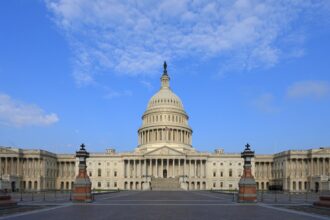
The Trump administration formally notified Congress on Tuesday, September 22, 2026, of its intention to admit 17,500 white South African farmers under emergency refugee status, setting off an intense legislative and constitutional debate across Capitol Hill.
In a statutory consultation letter delivered to the House and Senate Judiciary Committees, the State Department’s Bureau of Population, Refugees, and Migration detailed an emergency allocation under Section 207 of the Refugee Act of 1980. The notification asserts that white landowners and agricultural families in South Africa face systemic physical violence, state-sanctioned land redistribution threats, and targeted racial hostility that satisfy federal asylum standards.
The proposal represents a significant carve-out to the administration’s broader immigration policy, which has largely suspended general third-country refugee admissions while directing resources toward southern border security and large-scale interior deportation operations.
Statutory Consultation Under the Refugee Act of 1980
Under federal immigration law, the President has the statutory authority to establish annual refugee admission ceilings following formal consultation with the judiciary committees of both congressional chambers. The administration’s letter argues that the situation facing South African agricultural communities constitutes an “unforeseen emergency refugee situation” justifying a targeted humanitarian allocation outside normal geographic quotas.
The State Department memorandum outlines a specialized resettlement framework in partnership with rural agricultural organizations across the American Midwest and Great Plains. Under the proposed program, admitted families would be vetted through biometric background checks and matched with domestic farming communities facing severe labor and ownership transitions.
The policy arrives alongside other sweeping administrative moves to redefine federal citizenship, immigration metrics, and demographics. These initiatives include the administration’s contested proposal to exclude undocumented immigrants from decennial Census apportionment, as well as executive actions tested during earlier federal court rulings on multi-nation visa suspensions.

Capitol Hill Battle: Partisan Divisions Erupt
The congressional notification immediately triggered sharp partisan friction in both the House and Senate. Republican leaders on the House Judiciary Committee welcomed the proposal, arguing that the United States has an ethical obligation to provide asylum to persecuted agricultural producers facing targeted farm attacks and property seizures.
Conversely, Democratic lawmakers and civil rights organizations accused the administration of implementing a racially discriminatory admissions policy. Critics argued that prioritizing white South Africans while halting humanitarian protections for non-white refugees fleeing violence in Central America, the Caribbean, and the Middle East violates the neutral humanitarian intent of the Refugee Act.
The debate unfolds as federal immigration agencies operate under historic operational tempo, highlighted by record-breaking monthly interior arrest tallies recorded by ICE. Civil rights attorneys warned on Tuesday that if the emergency refugee determination proceeds without statutory adjustments, it will face swift constitutional equal-protection challenges in federal district courts.
Next Steps in the Congressional Review Process
While the Refugee Act mandates consultation with Congress, it does not require a formal affirmative vote of both chambers to take effect unless lawmakers pass a joint resolution of disapproval within thirty days. Given current party margins in the House and Senate, such a resolution faces steep legislative obstacles.
House Judiciary Committee Chairman Jim Jordan has scheduled a closed-door briefing with State Department and Department of Homeland Security officials for next week to review vetting procedures, security protocols, and operational logistics for the proposed admissions window.
With public hearings expected before the consultation period concludes, the South African refugee proposal promises to become a defining touchpoint in the closing weeks of the 2026 midterm campaign.
Legal historians note that Section 207 emergency declarations have historically been utilized during acute geopolitical crises, including the evacuation of Southeast Asian allies following the Vietnam War and humanitarian responses in the Balkans during the 1990s. However, invoking the emergency statute for a specific demographic group while maintaining broad administrative suspensions on other refugee processing channels establishes a novel precedent that legal analysts expect will test executive discretion in federal appellate courts.
Sources & Official Documentation
- Legal Information Institute (Cornell Law) – 8 U.S. Code § 1157 – Annual Admission of Refugees and Congressional Consultation
- Electronic Code of Federal Regulations (eCFR) – 8 CFR Part 207 – Admission of Refugees: Procedures, Eligibility, and Processing
- Legal Information Institute (Cornell Law) – 8 U.S. Code § 1101(a)(42) – Statutory Definition of Refugee and Persecution Standards