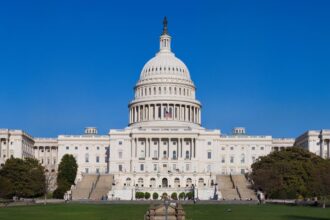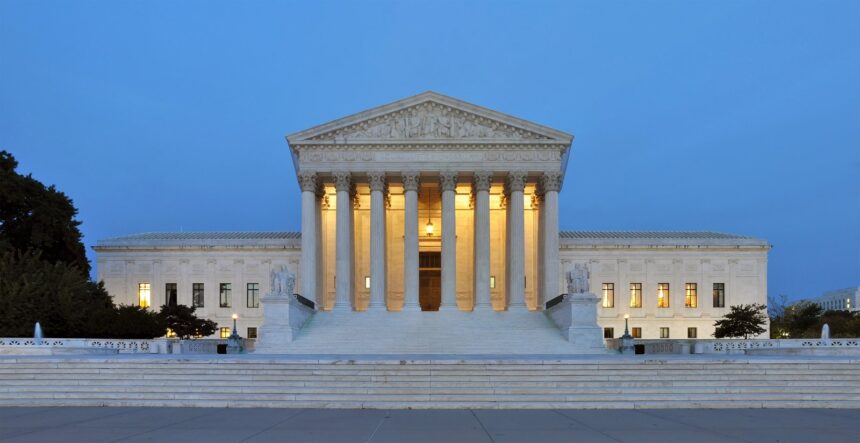
The justices granted certiorari to resolve an irreconcilable federal appeals court split over whether federal immigration statutes permit indefinite detention without individual judicial review.
WASHINGTON — The Supreme Court of the United States on October 1 officially agreed to review one of the most consequential immigration controversies of the upcoming judicial term, taking up a high-stakes challenge to the Trump administration’s policy of denying bond hearings to immigrants detained while actively contesting their deportation in federal immigration courts.
The grant of certiorari sets the stage for oral arguments in early 2027 to resolve a deep and entrenched split among federal appellate courts over the statutory interpretation of 8 U.S.C. § 1226(c) and the limits of the Fifth Amendment’s Due Process Clause. While hundreds of federal district judges and multiple circuit courts have declared the mandatory detention policy unconstitutional, the conservative-leaning U.S. Courts of Appeals for the Fifth and Eighth Circuits have upheld the administration’s authority to hold noncitizens without bond.
At issue is an executive enforcement directive implemented last year that dramatically expanded the categories of noncitizens subjected to mandatory detention without the possibility of bond release, encompassing long-term legal residents, asylum applicants, and individuals with minor civil infractions who have pending removal hearings that often take months or years to adjudicate.
The Circuit Split Dividing the Federal Judiciary
The geographic fragmentation of federal immigration law reached an unsustainable threshold in recent months, creating a disparate legal landscape where an immigrant’s access to a neutral magistrate depends entirely on the federal circuit in which they were apprehended or transferred:
- The Fifth and Eighth Circuits: Ruled in favor of the Department of Justice, holding that Congress granted the executive branch plenary authority under the Immigration and Nationality Act to mandate detention for designated classes of removable aliens without individualized judicial bail evaluations.
- The First, Second, and Ninth Circuits: Struck down the practice as a violation of procedural due process, holding that prolonged civil detention without a prompt hearing before an immigration judge to evaluate flight risk or community danger violates fundamental constitutional safeguards.
- District Court Pushback: Trial judges across the country have issued thousands of individual writs of habeas corpus ordering Immigration and Customs Enforcement (ICE) to provide bond hearings within 14 days of detention.
Statutory Interpretation of 8 U.S.C. § 1226(c)
The statutory battle turns on the precise scope of Section 1226(c), which instructs the Attorney General to take custody of certain criminal aliens “when the alien is released” from criminal custody. The Department of Justice argues that the provision imposes a mandatory, non-discretionary statutory obligation that strips immigration judges of jurisdiction to grant bond, regardless of how long the removal proceedings take.
Immigration defense attorneys and civil liberties coalitions counter that mandatory detention was intended by Congress only for a narrow subset of violent felons and national security threats, not for broad populations of civil immigration respondents. Citing Supreme Court precedents including Zadvydas v. Davis and Jennings v. Rodriguez, challengers argue that indefinite civil incarceration without judicial oversight crosses the boundary from civil immigration enforcement into unconstitutional punitive confinement.
Operational Pressures on ICE Detention Facilities
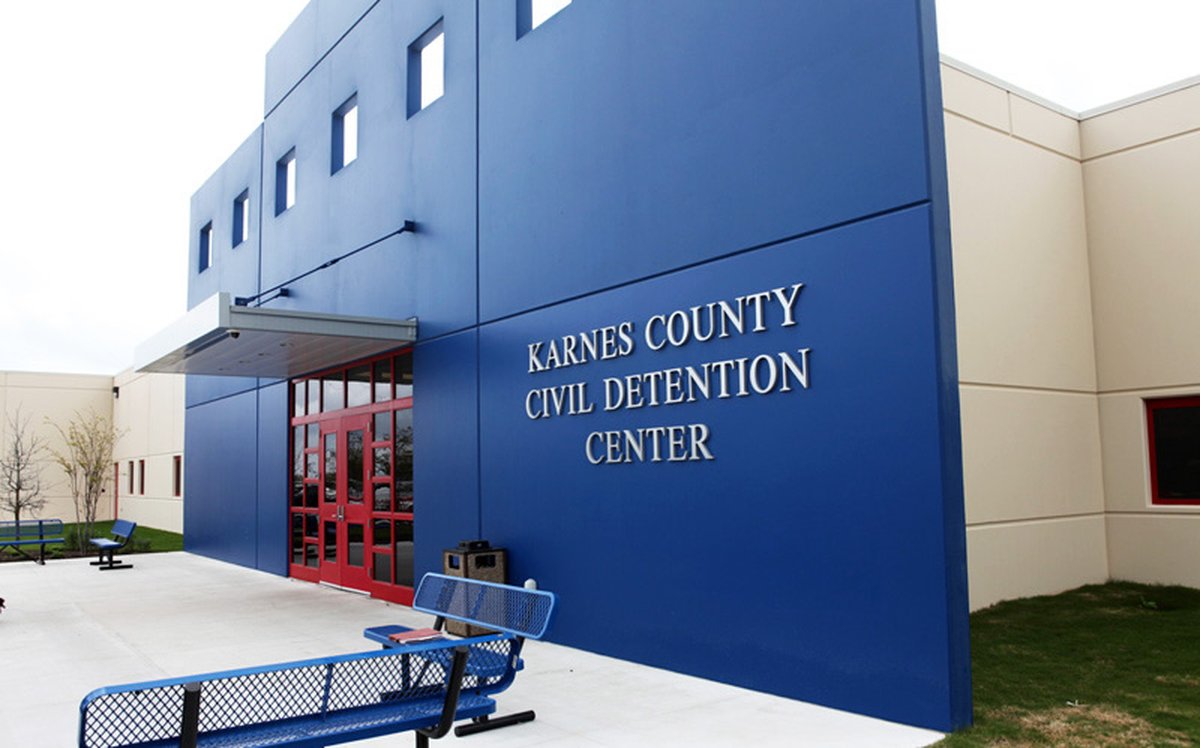
The high court’s ultimate determination carries profound logistical and budgetary ramifications for the federal government. ICE currently maintains an average daily detained population exceeding 42,000 individuals across private contract detention centers, county jails, and dedicated federal service processing facilities.
A ruling affirming the administration’s mandatory detention policy would cement elevated detention quotas, requiring Congress to appropriate billions of dollars in supplemental funding to expand bed capacity. Conversely, a ruling mandating bond hearings would lead to immediate bail docket surges across the nation’s immigration courts, allowing non-violent respondents to petition for conditional release while their immigration petitions remain pending.
High Stakes for the 2026-2027 Supreme Court Term
The grant of certiorari ensures that executive detention authority will remain a central focal point of national debate heading into next year. By agreeing to hear the case on the merits rather than issuing a provisional emergency shadow-docket ruling, Chief Justice John Roberts and the court’s conservative majority have positioned the court to establish definitive, nationwide precedent.
Briefing in the case will proceed through late autumn, with oral argument expected to be scheduled during the January or February 2027 sitting. Until a final decision is handed down next spring, the enforcement of bond hearing rights will remain subject to regional circuit boundaries, maintaining intense scrutiny on federal detention facilities nationwide.
Constitutional Due Process and Historical Detention Precedents
The constitutional debate over immigration detention strikes at the core of the Fifth Amendment’s guarantee that no person shall be deprived of liberty without due process of law. Historically, the Supreme Court has distinguished between border crossers seeking initial admission and noncitizens who have established deep roots within the United States. In seminal cases such as Demore v. Kim in 2003, the high court narrowly upheld brief periods of mandatory detention, but explicitly premised that authority on the assumption that removal proceedings typically conclude within a brief, predictable timeframe.
In the modern immigration court system, however, severe case backlogs regularly extend detention periods beyond eighteen months. Legal scholars emphasize that when mandatory detention stretches indefinitely without judicial review, it creates profound constitutional friction. The Court’s forthcoming decision will establish whether the executive branch possesses unchecked statutory power to detain civil respondents or whether the Constitution demands an individualized judicial check on executive incarceration.
Sources & Official Documentation
- Legal Information Institute (Cornell Law) – 8 U.S. Code § 1226 – Apprehension and Detention of Noncitizens Statutory Authority
- Oyez Supreme Court Judicial Database – Zadvydas v. Davis (533 U.S. 678) Precedent on Indefinite Immigration Detention and Due Process
- Electronic Code of Federal Regulations (eCFR) – 8 CFR Part 236 – Apprehension and Custody of Inadmissible and Deportable Aliens; Appeals