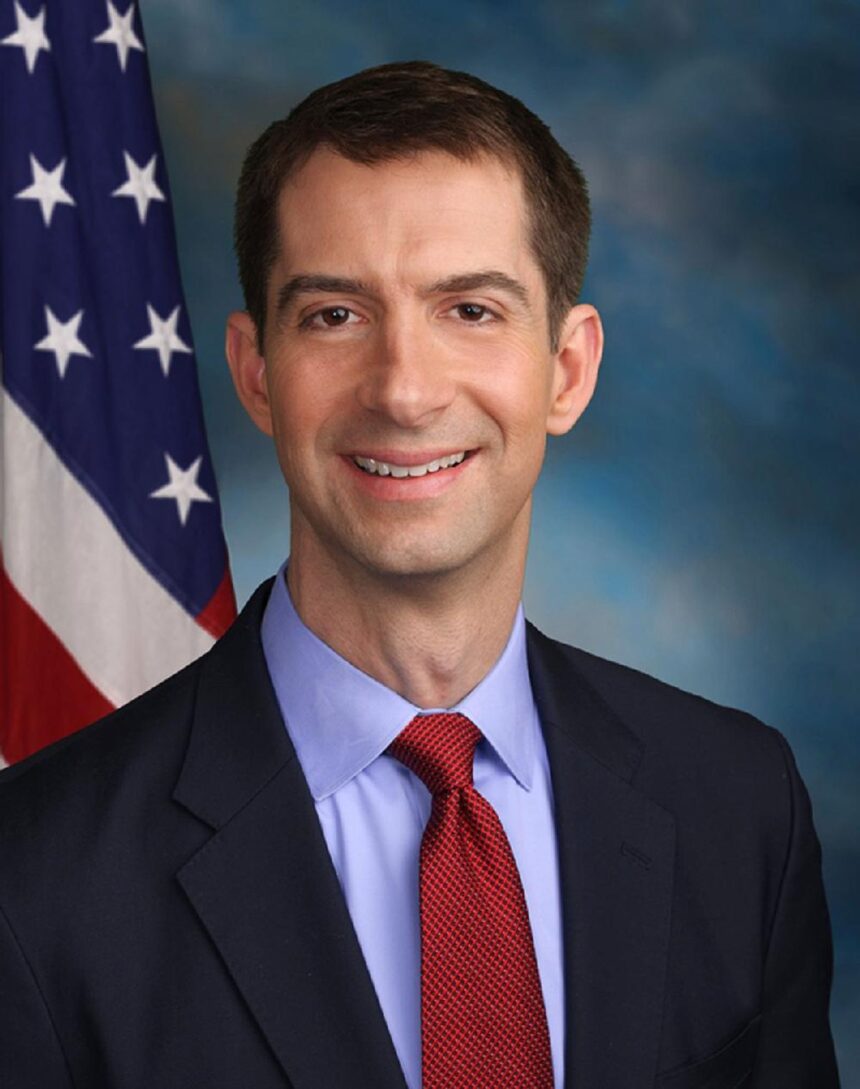
The President singled out the Senate Republican Conference Chair on social media, urging Arkansas voters to demand passage of the stalled Sunshine Protection Act.
WASHINGTON — An unexpected intra-party confrontation erupted between the White House and senior Senate Republican leadership in early October, as President Donald Trump publicly pressured Senator Tom Cotton (R-AR) over his opposition to the Sunshine Protection Act, a federal measure that would permanently end the biannual changing of clocks nationwide.
The dispute spilled into public view when President Trump posted a series of statements on Truth Social identifying Senator Cotton, the influential chairman of the Senate Republican Conference, as the primary institutional roadblock preventing the popular legislation from advancing to the Senate floor. In an aggressive escalation of public lobbying, Trump shared what he identified as Cotton’s personal telephone contact, urging Arkansas constituents to call their senator directly to demand that he clear the bill.
“The people of America are tired of switching their clocks back and forth like fools twice a year,” President Trump wrote. “The House passed the bill with massive bipartisan support. It is sitting on Senator Tom Cotton’s desk. Tom is a great guy, but he needs to listen to the people and GET IT DONE!”

Legislative Background: The Sunshine Protection Act
The legislative battle centers on the Sunshine Protection Act, a bipartisan proposal that has languished in procedural limbo despite broad public enthusiasm:
- House Passage: The bill passed the House of Representatives in July 2026 by a decisive bipartisan vote of 308–117, signaling broad support across both major parties.
- The Mechanism: Under the legislation, the United States would lock in Daylight Saving Time permanently, granting an extra hour of daylight in the evening year-round while eliminating the November “fall back” clock change.
- Economic and Health Arguments: Proponents argue that permanent evening sunlight boosts consumer retail spending, encourages outdoor recreation, reduces seasonal depression, and eliminates the documented spike in heart attacks and fatal traffic accidents that occur each spring during clock-change weekends.
Senator Cotton’s Counter-Argument: Dark Winter Mornings
Senator Cotton has remained steadfast in his resistance, articulating concerns shared by the National Parent Teacher Association, the American Academy of Sleep Medicine, and agricultural organizations. Cotton argues that permanent Daylight Saving Time would push winter sunrises past 8:30 or 9:00 AM across large swaths of the American interior and western edges of time zones.
“No one likes changing clocks, but permanent Daylight Saving Time means millions of schoolchildren will be waiting for buses in pitch darkness in the dead of winter, and construction workers and farmers will face hazardous early morning conditions,” Cotton’s office explained in response to the lobbying push. “If Congress wants to stop changing clocks, the sensible, biologically aligned solution is permanent Standard Time, not permanent Daylight Time.”
Historical precedent complicates the debate. In 1974, Congress enacted permanent Daylight Saving Time during the Arab oil embargo to save energy, but the policy became wildly unpopular within months when multiple children were struck by vehicles in dark winter mornings, prompting lawmakers to repeal the law after just nine months.
Populist Politics vs. Senate Procedural Power
The confrontation illustrates the unique friction between President Trump’s populist communication style and the institutional procedural power wielded by Senate committee leaders. As conference chair, Cotton exercises significant influence over floor scheduling and unanimous consent agreements.
Political analysts observe that by openly challenging Cotton—one of the administration’s most reliable foreign policy and judicial allies—Trump demonstrates his willingness to break traditional party decorum to pursue widely popular consumer issues that resonate directly with everyday voters ahead of the midterms.
Outlook for the Post-Election Lame-Duck Session
With the Senate currently adjourned for its pre-election recess, the bill cannot be considered until lawmakers return to Washington for the post-election lame-duck session in mid-November.
However, the public spotlight generated by the White House push ensures that the clock-change debate will be a priority issue when Congress reconvenes. Whether lawmakers compromise on permanent Standard Time or yield to presidential pressure for permanent Daylight Saving Time, the battle over America’s clocks has emerged as an unexpected flashpoint in Capitol Hill politics.
Public Health Coalitions and the Chronobiology Debate
The legislative friction between the White House and Senator Cotton reflects a sophisticated scientific dispute between public consumer preference and clinical chronobiology. Leading sleep medicine organizations, including the American Academy of Sleep Medicine and the Sleep Research Society, have formally lobbied Congress against permanent Daylight Saving Time, arguing that permanent Standard Time aligns far more naturally with human circadian rhythms by providing morning sunlight that synchronizes biological sleep-wake cycles.
Conversely, economic interest groups—including the National Association of Convenience Stores, the golf industry, and retail trade coalitions—strongly favor permanent Daylight Saving Time, citing consumer foot traffic studies showing that Americans shop and participate in recreational activities substantially more when evening daylight is extended. The political stalemate in the Senate highlights how seemingly straightforward lifestyle legislation intersects with competing commercial interests, medical consensus, and entrenched legislative prerogatives.
Sources & Official Documentation
- Legal Information Institute (Cornell Law) – 15 U.S. Code § 260a – Uniform Time Act Statutory Mandates and State Exemption Framework
- Legal Information Institute (Cornell Law) – 15 U.S. Code § 261 – Zones for Standard Time Authority and Boundaries
- Electronic Code of Federal Regulations (eCFR) – 49 CFR Part 71 – Standard Time Zone Boundaries Regulations