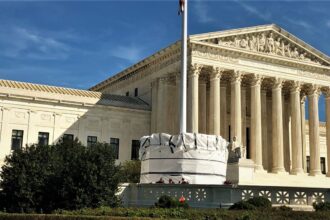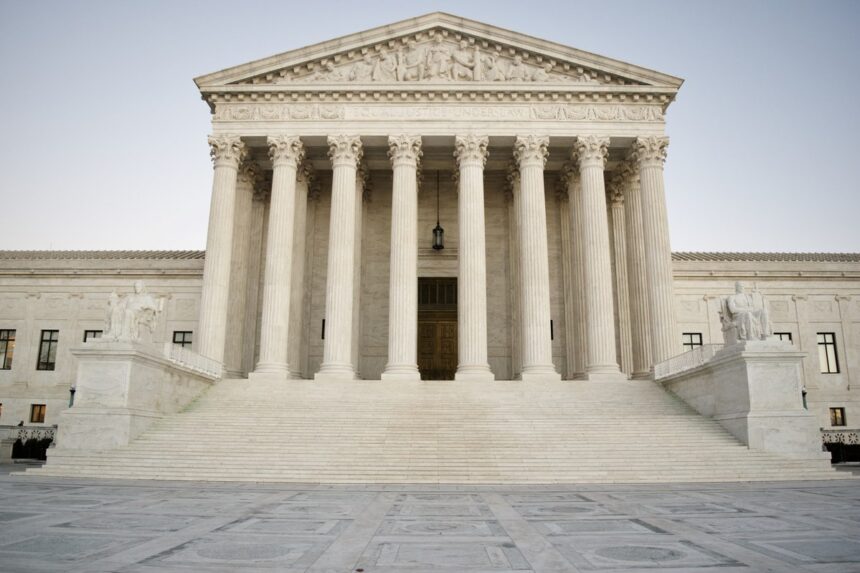
The high court left intact categorical lifetime firearm prohibitions for convicted felons, rejecting claims that nonviolent white-collar offenses fall outside historical Second Amendment disarmament traditions.
WASHINGTON — The Supreme Court of the United States on Tuesday issued an order declining to hear a major constitutional challenge contesting the lifelong categorical disarmament of nonviolent convicted felons under federal law. The high court’s decision leaves firmly intact the statutory prohibitions codified under 18 U.S. Code § 922(g)(1).
The emergency appeal, brought on behalf of individuals convicted decades ago of nonviolent federal financial crimes—specifically mail fraud and false statements on tax returns—contended that categorical lifetime disbarment from firearm ownership violates the Second Amendment. Petitioners argued that under the landmark historical tradition test established in New York State Rifle & Pistol Association v. Bruen and refined in United States v. Rahimi, the government must prove an explicit founding-era tradition of disarming citizens who pose no physical threat of violent dangerousness.
By declining the petition without noted dissent, the justices left undisturbed conflicting federal appellate precedents across multiple circuits, effectively preserving the federal government’s primary criminal statute used to prosecute prohibited persons in possession of firearms and ammunition.

The Post-Rahimi Legal Landscape on Dangerousness and Disarmament
The denial provides vital insight into how the high court views the boundaries of its recent Second Amendment jurisprudence following its June 2024 ruling in United States v. Rahimi. In that decision, Chief Justice John Roberts authored an 8–1 opinion affirming that an individual may be disarmed when a court finds they pose a credible threat to the physical safety of others.
Second Amendment advocacy organizations had argued that Rahimi‘s dangerousness standard logically precluded the lifetime disarmament of individuals whose criminal history consists solely of nonviolent paperwork offenses, check fraud, or regulatory violations. However, the Department of Justice’s Solicitor General vigorously defended the categorical statute, presenting historical colonial statutes showing that founding-era legislatures routinely disarmed categories of citizens deemed to have demonstrated disrespect for the rule of law.
The Justice Department cautioned that establishing individualized judicial hearings to determine whether millions of convicted felons are “sufficiently dangerous” to be disarmed would overwhelm federal district courts and create immense public safety risks by undermining a clear, bright-line federal enforcement benchmark.
Impact on Federal Prosecutions and Law Enforcement Operations
Federal law enforcement agencies, including the FBI and the Bureau of Alcohol, Tobacco, Firearms and Explosives (ATF), regard Section 922(g)(1) as one of their most indispensable tools in combating violent crime and street gang activity. Tens of thousands of federal indictments are returned annually under the felon-in-possession statute, frequently serving as the primary charge used to take armed repeat offenders off the streets.
The high court’s refusal to disturb the statute ensures that prosecutors retain full statutory authority to enforce federal firearm bans without being forced to prove an underlying violent predicate during trial. Federal penalties for unlawful firearm possession by a prohibited person carry statutory sentences of up to 15 years in federal prison.
The judicial determination follows other significant federal rulings on statutory governance and executive law enforcement authority, echoing recent actions such as the DOJ task force interdiction initiatives and strict enforcement of federal criminal codes.
Legislative Paths and Second Amendment Perspectives
While the judicial route for nonviolent felons remains closed at the Supreme Court for now, several lawmakers in Congress have proposed statutory relief through legislative reform. Bipartisan bills introduced in both the House and Senate would establish an administrative restoration process allowing individuals with nonviolent, single-offense felony records to petition a federal judge for rights restoration after remaining crime-free for ten years.
Gun rights advocates, while expressing disappointment with the certiorari denial, indicated that they will continue challenging state-level firearm bans and testing alternative Second Amendment applications in the lower courts. For the foreseeable future, however, the categorical federal prohibition remains fully operative nationwide.
Sources & Official Documentation
- Legal Information Institute (Cornell Law School) – 18 U.S. Code § 922 – Unlawful Acts: Prohibitions on Firearm Possession by Convicted Felons
- Legal Information Institute (Cornell Law School) – U.S. Constitution, Amendment II – Right to Keep and Bear Arms and Regulatory Boundaries
- Oyez Supreme Court Archive – United States v. Rahimi (602 U.S. ___) – Supreme Court Precedent on Firearm Regulations and Dangerousness