

Senior cabinet officials evaluated military strike options and prepared the deployment of a third aircraft carrier group amid stalled regional negotiations and escalating maritime attacks.
CAMP DAVID, Md. — In an unannounced, multi-hour national security council session convened at the presidential retreat at Camp David on Friday, October 2, Vice President JD Vance brought together the nation’s top defense and diplomatic leadership to finalize military contingency plans and operational posture across the Middle East.
The high-level conclave included Secretary of State Marco Rubio, Secretary of Defense Pete Hegseth, White House Special Envoy Steve Witkoff, Central Intelligence Agency Director John Ratcliffe, and Chairman of the Joint Chiefs of Staff General Dan Caine. According to senior defense officials familiar with the discussions, the meeting evaluated military options following the collapse of diplomatic overtures regarding commercial navigation in the Strait of Hormuz and escalating clashes between the Saudi-backed Yemeni coalition and the Houthi movement.
The strategic gathering underscores the administration’s intensifying focus on regional deterrence. With diplomatic channels effectively frozen, national security planners reviewed operational targeting packages designed to strike deep command-and-control infrastructure and drone manufacturing sites if commercial shipping attacks persist.
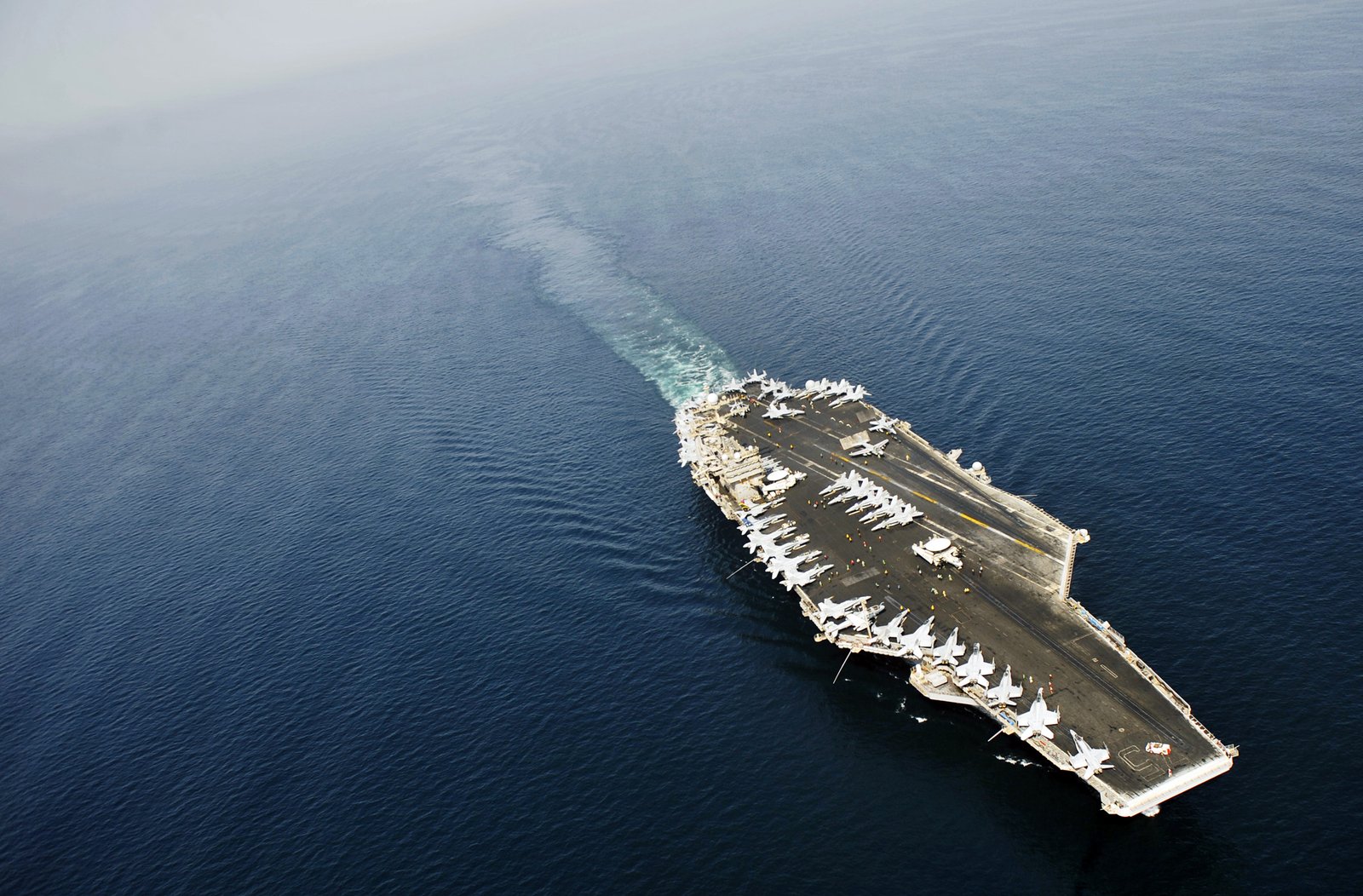
Carrier Surge and Force Posture in Central Command
Central to the Camp David deliberations was the operational timetable for an expanded naval and air deployment into the U.S. Central Command (CENTCOM) area of responsibility. Defense Department planners finalized orders to deploy a third aircraft carrier strike group to the region alongside specialized Marine Expeditionary Units:
- Third Carrier Deployment: The Pentagon is preparing to surge an additional nuclear-powered aircraft carrier group to join existing naval assets in the Arabian Sea and Gulf of Oman by late November.
- Expeditionary Reinforcements: Amphibious ready groups carrying Marine strike squadrons and specialized electronic warfare aircraft are repositioning to provide enhanced air defense corridors across the Red Sea and Bab el-Mandeb strait.
- Saudi Requests for Joint Action: Officials reviewed formal diplomatic requests from Riyadh urging coordinated airstrikes against Houthi ballistic missile emplacements in western Yemen ahead of a planned regional ground offensive.
Targeting Protocols and Escalation Management
The council evaluated complex scenarios regarding escalation thresholds. While the administration has prioritized the preservation of open maritime trade lanes, military planners must balance retaliatory strikes against the risk of triggering an open-ended regional confrontation that could disrupt global energy supplies weeks before the domestic election.
CIA Director John Ratcliffe presented updated intelligence assessments regarding regional proxy networks, highlighting that adversary forces have decentralized their drone launching infrastructure to avoid conventional aerial reconnaissance. General Dan Caine detailed kinetic strike options utilizing long-range precision munitions launched from regional forward operating bases, designed to incapacitate coastal radar installations while minimizing collateral risks.
Diplomatic Isolation and Allied Coordination
On the diplomatic front, Secretary of State Marco Rubio briefed the council on multilateral outreach to European and Gulf allies participating in maritime task forces. European partners, while committed to freedom of navigation patrols, have expressed caution regarding offensive preemptive strikes that lack explicit United Nations mandates.
Special Envoy Steve Witkoff detailed backchannel communications indicating that regional adversaries remain entrenched, viewing ongoing maritime disruption as asymmetric leverage against Western commercial markets. Vice President Vance and the national security chiefs affirmed that while direct military strikes remain a last resort, the United States will not permit critical maritime transit routes to be held hostage by non-state actors.
Next Steps and Presidential Briefings
The recommendations formulated during the Camp David meeting were formally submitted to President Trump on Saturday morning. The President, who was briefed aboard Air Force One during travel to campaign events in Alabama and Oklahoma, retains sole constitutional authority to authorize kinetic military operations.
With military assets already moving into forward staging positions across the Mediterranean and Persian Gulf, the Camp David summit signals that the United States is prepared to significantly escalate its defensive and offensive operations to ensure stability across critical international waterways.
Congressional War Powers and Coalition Diplomacy
The deliberations at Camp David carry significant constitutional and legislative dimensions regarding executive war powers. Under the War Powers Resolution of 1973, the executive branch must notify Congress within 48 hours of deploying armed forces into active hostilities and cannot sustain non-statutory military operations beyond 60 days without legislative authorization. While past administrations have relied on the 2001 and 2002 Authorizations for Use of Military Force (AUMF) to justify anti-terrorism and maritime defense strikes, legal scholars on Capitol Hill have argued that an expanded offensive campaign against state-linked regional infrastructure requires a fresh congressional debate.
Simultaneously, international maritime shipping conglomerates based in Europe and Asia have closely monitored the Pentagon’s deployment timeline. War risk insurance premiums for container vessels transiting the Gulf of Aden and Red Sea have surged by more than 300 percent over the past six months, forcing major shipping lines to divert cargo around Africa’s Cape of Good Hope. Defense analysts emphasize that the arrival of a third carrier strike group is intended to suppress insurance risk premiums by establishing an impenetrable layered missile defense umbrella across commercial sea lanes.
Sources & Official Documentation
- Legal Information Institute (Cornell Law) – 50 U.S. Code § 3021 – National Security Council Composition and Presidential Advisory Functions
- Legal Information Institute (Cornell Law) – 50 U.S. Code § 1541 et seq. – War Powers Resolution Statutory Provisions and Reporting Mandates
- Legal Information Institute (Cornell Law) – 10 U.S. Code § 164 – Unified Combatant Commands Powers and Operational Chain of Command