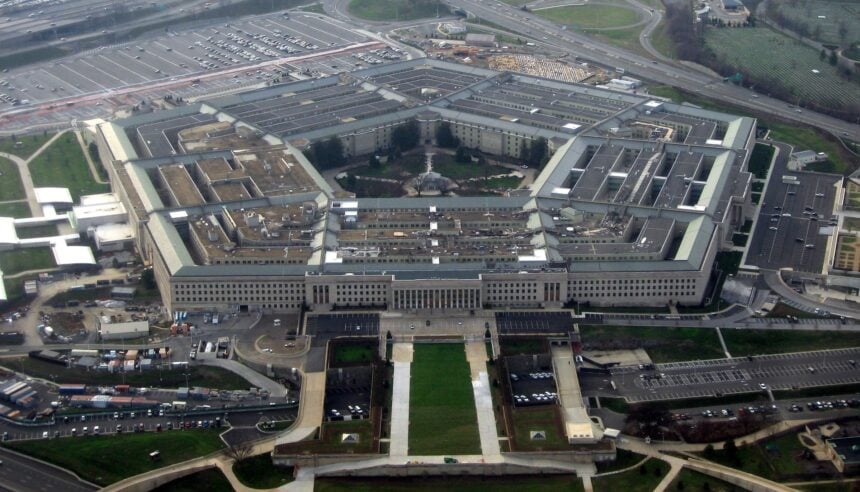
A federal judge struck down the Defense Department’s supply-chain risk designation against AI firm Anthropic, ruling the Pentagon unlawfully retaliated over speech.
SAN FRANCISCO — A federal judge issued a landmark ruling on Friday, August 28, 2026, striking down the Department of Defense’s administrative blacklisting of leading artificial intelligence developer Anthropic, declaring that the Pentagon’s designation of the American technology firm as a “supply-chain risk” was an unlawful and retaliatory abuse of executive authority.
In a comprehensive 59-page decision, U.S. District Judge Rita Lin of the U.S. District Court for the Northern District of California vacated the Pentagon’s procurement ban and prohibited all federal agencies from enforcing directives that barred government contractors and civil agencies from using Anthropic’s Claude AI systems.
Origins of the Defense Department Conflict
The high-stakes legal clash erupted earlier this year after senior officials within the Department of Defense, under Defense Secretary Pete Hegseth, demanded that commercial AI developers provide unrestricted access to their frontier language models for military applications, including autonomous kinetic weapons systems and domestic surveillance operations.
Anthropic refused to alter its commercial usage guidelines, citing internal safety protocols and constitutional concerns regarding the unauthorized deployment of generative AI in lethal decision-making loops. In response, the Defense Department issued an administrative order classifying Anthropic as a national security “supply-chain risk”—a severe administrative designation historically reserved for foreign adversary technology firms—effectively freezing the company out of billions in federal contracts.
The confrontation unfolds amid broader national battles over executive regulatory boundaries and administrative procedure, following recent state legal challenges over Pentagon moratoria on domestic infrastructure compatibility reviews and federal enforcement actions involving major technology regulatory penalties.
Judicial Findings on Free Speech and Retaliation
In her detailed ruling, Judge Lin determined that the Defense Department’s actions violated both the First Amendment and the Administrative Procedure Act. The court found compelling evidence that the Pentagon used its procurement powers to punish Anthropic for publicly expressing concerns regarding military AI guardrails and exercising its constitutional right to dissent from administration policies.
Judge Lin wrote that the government cannot invoke vague national security claims as a blank check to silence or economically punish domestic technology firms that disagree with executive branch policy. The court noted that the Pentagon failed to produce credible evidence demonstrating that Anthropic’s software posed any genuine technical vulnerability or operational risk to defense communications.
Technology policy experts described the ruling as one of the most consequential legal precedents to date regarding the boundaries of federal power in the commercial artificial intelligence industry, establishing clear protections for private developers against coerced military weaponization and safeguarding civil liberties in frontier technology.
Broader Industry Implications and Commercial Precedent
The decision is expected to have far-reaching effects across Silicon Valley and the broader defense contracting ecosystem. Major cloud computing providers, research institutes, and enterprise software vendors had expressed private alarm that the Pentagon’s supply-chain designation mechanism was being weaponized against domestic companies over policy disagreements.
Industry analysts noted that Judge Lin’s injunction provides commercial software vendors with essential legal protections, ensuring that federal procurement decisions must be rooted in demonstrable technical standards and statutory procedures rather than political retaliation.
The ruling also provides clarity for existing government agencies—including the Department of Energy and the National Institutes of Health—which had integrated Anthropic’s language models into critical non-defense research projects before the Pentagon’s procurement freeze was instituted.
Government Response and Future Appeals
Justice Department attorneys representing the Pentagon expressed strong disagreement with the court’s decision, asserting that military leadership must maintain absolute discretion to establish procurement and supply-chain standards for critical national defense infrastructure.
The Justice Department is preparing an emergency appeal to the U.S. Court of Appeals for the Ninth Circuit, seeking a stay of Judge Lin’s injunction pending further judicial review, setting the stage for a major appellate showdown on executive procurement authority and commercial speech protections.
Legal observers emphasize that the case will likely reach the Supreme Court, establishing the definitive constitutional balance between presidential defense prerogatives and commercial First Amendment freedoms in the artificial intelligence era.
Sources
- U.S. District Court for the Northern District of California: Memorandum and Order Granting Permanent Injunction in Anthropic PBC v. Department of Defense
- The Washington Post: Federal Judge Strikes Down Pentagon Blacklist of AI Developer Anthropic
- The Guardian: Coverage of U.S. Court Ruling Overturning Military AI Supply-Chain Risk Tag
- PBS NewsHour: Analysis of Judicial Boundaries on National Security and Commercial AI Technology