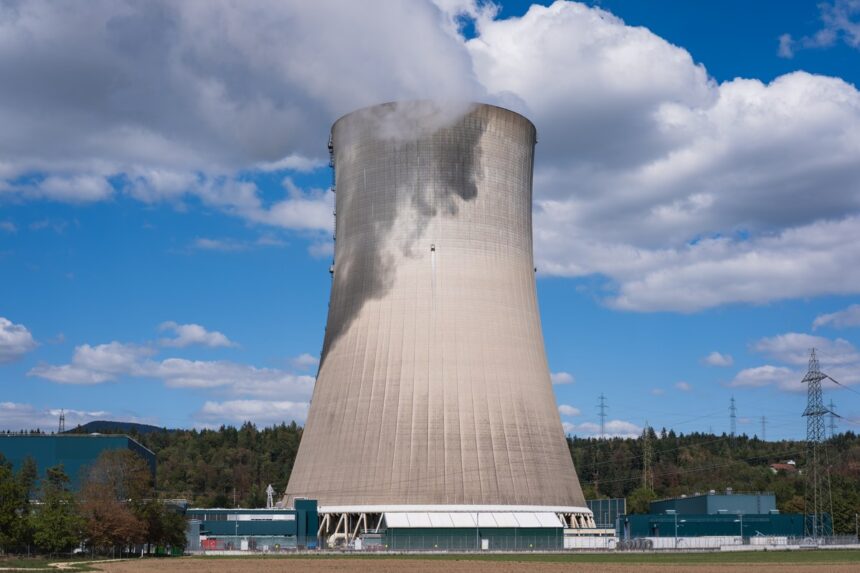
By a commanding 44–6 vote, lawmakers advanced the landmark bill establishing an expedited one-year regulatory pathway to power artificial intelligence data centers and industrial grids.
WASHINGTON — In a decisive bipartisan committee vote reflecting urgent national demand for reliable, carbon-free baseload electricity, the House Energy and Commerce Committee on Tuesday voted 44 to 6 to advance the Advanced Reactor Deployment and Regulatory Streamlining Act of 2026.
The landmark legislation overhauls decades-old regulatory frameworks at the Nuclear Regulatory Commission (NRC), directing the agency to establish a streamlined, performance-based 12-month commercial licensing pathway for advanced Small Modular Reactors (SMRs) and microreactors. The bill systematically removes bureaucratic hurdles that historically subjected next-generation nuclear reactor designs to multi-year review timelines and hundreds of millions of dollars in administrative filing fees.
The legislative acceleration responds directly to an unprecedented surge in American electrical power consumption. Driven by the rapid proliferation of high-density artificial intelligence computing centers, advanced manufacturing semiconductor fabrication plants, and heavy industrial electrification, regional electrical grid operators have warned that existing domestic generation capacity is falling dangerously behind projected demand.

Core Provisions of the Advanced Reactor Modernization Bill
The legislation amends key statutory provisions of the Atomic Energy Act of 1954 (42 U.S. Code § 2232 and § 2014) to replace legacy Cold War regulatory standards with specialized review protocols tailored specifically to factory-manufactured modular nuclear systems:
- Expedited 12-Month NRC Final Licensing: Mandates that the Nuclear Regulatory Commission issue final licensing determinations on pre-certified modular reactor designs within twelve calendar months of application docketing.
- Regulatory Application Fee Caps: Caps total reimbursable NRC regulatory review fees at $15 million per design certification, ending open-ended hourly billing structures that previously bankrupted emerging domestic technology startups.
- Coal-to-Nuclear Priority Siting: Creates an expedited environmental assessment process for advanced reactors deployed on the sites of decommissioned coal-fired power stations, utilizing existing electrical switchyards and transmission lines.
- High-Assay Low-Enriched Uranium (HALEU) Guarantees: Authorizes $1.8 billion in federal matching funds to establish domestic enrichment infrastructure for advanced HALEU fuel, ending American dependence on Russian state-owned fuel suppliers.
Committee leaders pointed to successful technological breakthroughs from American developers like NuScale Power, TerraPower, and Westinghouse, which have designed walk-away safe reactors with passive cooling mechanisms that eliminate the risk of core meltdowns even during complete electrical station blackouts.
Powering Artificial Intelligence and Industrial Reshoring
The political driving force behind the bipartisan consensus is the extraordinary power demand of the emerging artificial intelligence infrastructure economy. Major technology firms—including Microsoft, Amazon, Google, and Oracle—have recently committed tens of billions of dollars to secure dedicated nuclear energy generation to power massive hyperscale data centers requiring 24/7 uninterruptible power.
Witnesses testifying before the committee emphasized that while solar and wind installations provide supplemental energy, their intermittent nature makes them fundamentally incapable of supporting gigawatt-scale data clusters or advanced semiconductor fabs that require continuous baseload reliability. SMRs, which can be constructed in modules generating 50 to 300 megawatts, can be sited directly adjacent to industrial parks and private corporate campuses.
The energy infrastructure reform dovetails with ongoing legislative efforts to restore domestic technological superiority, echoing the Senate’s recent passage of the $14 billion defense microelectronics reshoring bill and federal capital modernization initiatives.
Floor Vote Outlook and Bipartisan Senate Alignment
With an overwhelming 44–6 margin out of committee, House leadership announced that the legislation will be scheduled for a full chamber floor vote under suspension of the rules within the coming legislative week. Senate Energy and Natural Resources Committee leadership has already prepared bipartisan companion text, signaling that the bill could reach the President’s desk before the end of the year.
Energy analysts consider the bill the most significant overhaul of federal commercial nuclear policy since the Energy Policy Act of 2005, positioning the United States to lead the global commercial nuclear renaissance and guarantee affordable, abundant baseload energy for decades to come.
Sources & Official Documentation
- Legal Information Institute (Cornell Law School) – 42 U.S. Code § 2232 – Atomic Energy Act: License Applications and Operating Authorizations
- Legal Information Institute (Cornell Law School) – 42 U.S. Code § 2014 – Atomic Energy Act: Definitions of Special Nuclear Material and Utilization Facilities
- Electronic Code of Federal Regulations (eCFR) – 10 CFR Part 52 – Licenses, Certifications, and Approvals for Nuclear Power Plants