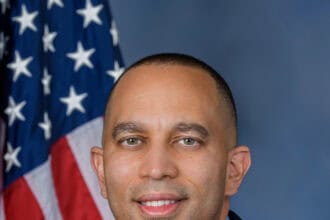
A three-judge panel of the Fifth Circuit ruled that state legislatures possess constitutional authority to eliminate political litmus tests from public higher education recruitment.
NEW ORLEANS — In a monumental legal decision with sweeping implications for American higher education, the U.S. Court of Appeals for the Fifth Circuit on Monday upheld state statutes prohibiting public colleges and universities from requiring diversity, equity, and inclusion (DEI) statements or ideological pledges as conditions of faculty employment, tenure, or promotion.
The 2–1 decision by a three-judge appellate panel sitting in New Orleans rejected constitutional challenges brought by university faculty associations and civil rights organizations contesting comprehensive state reform laws enacted in Texas and Florida. The court concluded that state legislatures, as sovereign representatives of the taxpaying public, possess legitimate authority to establish hiring criteria for state-funded educational institutions and eliminate partisan political litmus tests from the academic appointment process.
Writing for the majority, Circuit Judge James Ho affirmed that mandatory diversity statements—which previously required prospective professors to detail their personal ideological commitments to contemporary social justice doctrines—operate as unconstitutional compelled speech and ideological gatekeeping in violation of basic meritocratic hiring principles.

Distinguishing Institutional Governance From Academic Freedom
The appellate ruling drew a sharp constitutional demarcation between an individual scholar’s First Amendment right to conduct research and express opinions, and a state university’s institutional authority to establish employment criteria funded by public appropriations.
The court explicitly rejected plaintiffs’ arguments that state bans on mandatory diversity statements infringe upon academic freedom under the First Amendment. Instead, the majority reasoned that requiring job applicants to profess allegiance to specific ideological tenets is the antithesis of academic freedom, serving to exclude qualified scholars whose academic perspectives diverge from prevailing administrative orthodoxies.
“The First Amendment protects academic freedom; it does not confer a constitutional right upon public university administrators to enforce ideological conformity through compulsory loyalty oaths,” the majority opinion stated. “A state legislature acts well within its constitutional domain when it mandates that public universities evaluate scholars based on academic merit, teaching excellence, and scholarly achievement rather than adherence to bureaucratic diversity credos.”
The Nationwide Momentum to Reform Public Higher Education
The Fifth Circuit ruling arrives amidst an expanding legislative movement across the country to reform public higher education governance. Over the past three legislative sessions, more than fifteen state legislatures have enacted or introduced measures dismantling institutional DEI bureaucracies, prohibiting mandatory diversity training for students and staff, and restoring colorblind equality standards under the Fourteenth Amendment.
State officials celebrating the legal victory emphasized that the statutes do not prohibit professors from teaching controversial subjects, conducting research into racial history, or discussing civil rights in academic classrooms. Rather, the laws restrict administrative hiring committees from penalizing applicants who decline to submit ideological loyalty affirmations.
The judicial validation aligns directly with broader federal legal efforts challenging state and administrative speech mandates, following other recent landmark constitutional clashes like the Supreme Court’s review of classroom digital governance and student rights.
Dissenting Opinions and Path to the Supreme Court
In a forceful dissent, the minority panel member argued that state legislative restrictions on hiring criteria constitute impermissible viewpoint discrimination that chills scholarly dialogue and micro-manages internal university governance. Dissenting counsel contended that evaluating an applicant’s ability to mentor diverse student bodies is a standard administrative assessment that should remain within the discretion of faculty search committees.
Attorneys representing the faculty plaintiffs immediately announced plans to petition the entire Fifth Circuit for an en banc rehearing, while signaling their determination to take the constitutional challenge to the Supreme Court if the panel decision stands.
With conflicting appellate precedents emerging across different federal circuits regarding state authority over university administration, legal analysts expect the dispute to ultimately serve as a definitive Supreme Court showdown on academic freedom, compelled speech, and the power of sovereign states to govern public educational institutions.
Sources & Official Documentation
- Legal Information Institute (Cornell Law School) – U.S. Constitution, Amendment I – Freedom of Speech and Compelled Expression in Public Employment
- Legal Information Institute (Cornell Law School) – 20 U.S. Code § 1011a – Higher Education Act: Protection of Student and Faculty Speech Rights in Higher Education
- Legal Information Institute (Cornell Law School) – 42 U.S. Code § 2000e-2 – Civil Rights Act of 1964: Unlawful Employment Practices and Non-Discrimination Mandates