
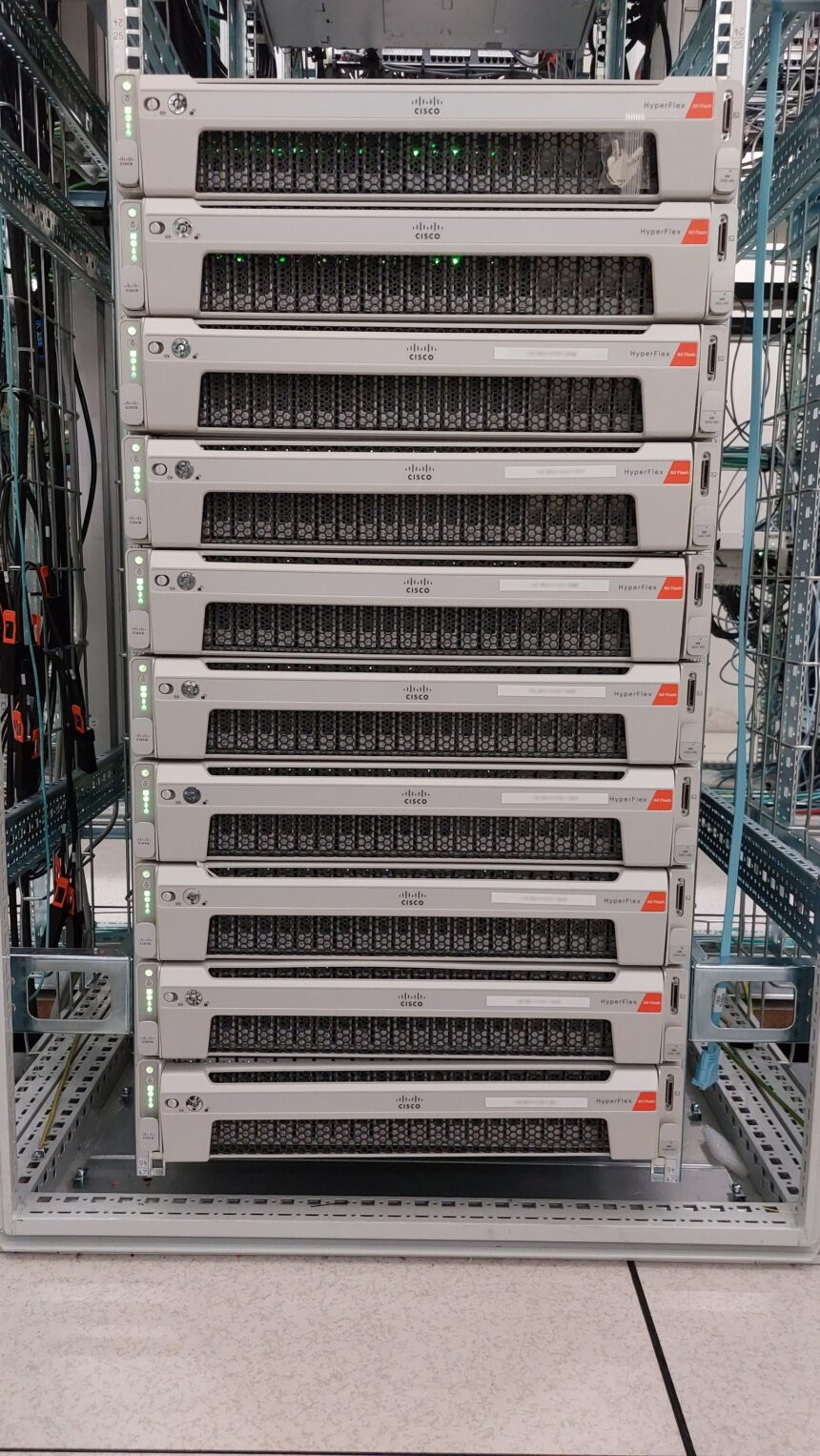
Federal agents arrested 11 operatives across three states and seized $48 million in restricted high-bandwidth GPU clusters and lithography components under the Export Control Reform Act.
WASHINGTON — The Department of Justice National Security Division and the Department of Commerce Bureau of Industry and Security (BIS) on Thursday unsealed a sweeping 24-count federal indictment charging 11 operatives with orchestrating a transnational procurement network that smuggled $48 million worth of export-controlled artificial intelligence accelerator chips and precision wafer lithography components to restricted foreign military supercomputing laboratories.
Coordinated raids executed by the Disruptive Technology Strike Force in California, Texas, and New Jersey resulted in the physical seizure of more than 1,100 liquid-cooled AI server modules containing high-bandwidth graphics processing units (GPUs), along with $11.4 million in illicit wire transfer proceeds held in domestic correspondent bank accounts.
According to court filings unsealed in federal district court, the defendants operated a web of front companies that falsely certified to American semiconductor manufacturers that the high-density computing clusters were destined for domestic cloud-hosting centers in Nevada and Texas, before surreptitiously repackaging the hardware inside commercial industrial chillers for maritime export.

Criminal Enforcement Under the Export Control Reform Act (50 U.S. Code § 4819)
The indictment charges the defendants with willful violations of the Export Control Reform Act of 2018 (50 U.S. Code § 4819), the International Emergency Economic Powers Act (50 U.S. Code § 1705), and the Export Administration Regulations governing military end-users and Entity List restrictions (15 CFR Part 744). Under 50 U.S. Code § 4819, each criminal count of smuggling controlled dual-use technology carries a statutory maximum penalty of 20 years in federal prison and up to $1 million in criminal fines per violation.
Forensic investigators from the Bureau of Industry and Security Office of Export Enforcement traced the illicit diversion scheme across three distinct operational stages:
- Straw-Buyer Procurement and End-User Falsification: Utilizing newly incorporated Delaware and Wyoming LLCs to submit fraudulent end-user certificates claiming the AI accelerators would remain inside U.S. commercial data centers.
- Serial Number Scrubbing and Firmware Modification: Stripping manufacturer barcode transponders and telemetry modules inside an unlicensed warehouse near Houston, Texas, to prevent remote geolocation verification during boot sequences.
- Transshipment Through Third-Country Freight Forwarders: Misdeclaring the server blades on automated export manifests as standard uninterruptible power supply (UPS) battery cabinets routed through transshipment ports in Southeast Asia and the Middle East to designated Entity List military research institutes.
Thursday’s enforcement sweep reinforces the federal government’s intensifying crackdown on transnational smuggling and illicit financial networks, following Wednesday’s Coast Guard and DEA interdiction of a cartel narco-submarine in the Eastern Pacific and the DOJ-Treasury Operation Sovereign Shield crackdown on illicit real estate money laundering.
Preventing Foreign Military Supercomputing and Hypersonic Modeling
National security officials emphasized that advanced AI accelerator chips—capable of performing quadrillions of floating-point operations per second—are no longer merely commercial enterprise tools. In the hands of foreign military-civil fusion institutes regulated under 15 CFR Part 744, massive GPU clusters are utilized to simulate hypersonic glide vehicle aerodynamics, train autonomous swarm-drone targeting algorithms, and conduct cryptographic signals intelligence decryption.
“Every advanced American microchip diverted to a foreign adversary’s military laboratory directly threatens the safety of United States service members and our strategic technological edge,” Assistant Attorney General for National Security stated during a joint press briefing in Washington. “Through the Disruptive Technology Strike Force, we are prosecuting not only the middlemen who falsify shipping manifests, but the financial facilitators and corporate executives who knowingly turn a blind eye to red-flag transshipment schemes.”
Entity List Additions and IEEPA Asset Forfeitures Under 50 U.S. Code § 1705
Simultaneously with the unsealing of the criminal indictment, the Commerce Department published an immediate rule in the Federal Register adding 22 foreign logistics firms, electronics brokers, and overseas laboratories implicated in the conspiracy to the BIS Entity List under 15 CFR Part 744. The designation imposes a total presumption of denial on all future license applications involving American-origin software, commodities, or semiconductor manufacturing equipment.
Federal prosecutors also filed civil and criminal forfeiture complaints under 50 U.S. Code § 1705 to permanently confiscate the $48 million in seized semiconductor hardware and $11.4 million in bank accounts. All 11 arrested defendants were ordered detained pending trial following initial appearances in federal court on Thursday afternoon.
In addition to the criminal prosecutions, BIS announced new mandatory post-shipment verification protocols requiring domestic server integrators to conduct physical on-site audits of bulk high-bandwidth GPU deployments within 30 days of delivery. Officials stated that combining hardware-level cryptographic location locking with aggressive criminal enforcement under 50 U.S. Code § 4819 will close remaining diversion channels exploited by foreign military procurement rings.
Sources & Official Documentation
- Legal Information Institute (Cornell Law School) – 50 U.S. Code § 4819 – Export Control Reform Act Specific Unlawful Acts and Criminal Penalties
- Legal Information Institute (Cornell Law School) – 50 U.S. Code § 1705 – International Emergency Economic Powers Act (IEEPA) Enforcement and Penalties
- Electronic Code of Federal Regulations (eCFR) – 15 CFR Part 744 – Export Administration Regulations Control Policy: End-User and End-Use Based Restrictions


