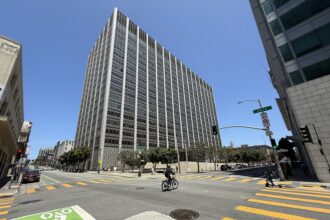
With pandemic-era federal bailouts exhausted and downtown commercial property tax assessments plunging by 40 percent, America’s largest metropolitan governments are hurtling toward a historic debt reckoning.
CHICAGO — For half a decade, the mayors and city councils of America’s largest metropolitan jurisdictions lived in a fiscal fantasy land. Flush with hundreds of billions of dollars in pandemic-era federal stimulus transfers, municipal politicians expanded permanent government payrolls, launched open-ended sanctuary entitlement programs, and deferred long-overdue pension reforms. In October 2026, the federal bailout spigot is finally dry, and the mathematical reality is devastating.
Across New York, Chicago, San Francisco, Los Angeles, and Boston, budget directors are confronting multi-billion-dollar structural operating deficits that can no longer be disguised through accounting gimmicks. What makes this urban fiscal crisis uniquely dangerous is that it is unfolding alongside a structural collapse in the exact tax base that big cities have relied upon for generations: downtown commercial office real estate.
As institutional investors scrutinize municipal balance sheets under federal securities disclosure rules (17 CFR § 240.15c2-12), credit rating downgrades are accelerating, driving up municipal borrowing costs and raising the specter of municipal debt restructurings under Chapter 9 of the U.S. Bankruptcy Code (11 U.S. Code § 901).

The Commercial Real Estate Doom Loop and Eroding Tax Bases
The anatomy of the urban “doom loop” is straightforward. Persistent remote work patterns, compounded by deteriorating street-level public safety and punitive local business taxes, have left downtown Class B and Class C office towers across major cities with effective vacancy rates exceeding 25 to 35 percent. As long-term commercial leases expire and buildings sell at 50 to 70 percent discounts from their pre-2020 valuations, property owners are successfully appealing their municipal tax assessments.
Because commercial real estate taxes historically generated between 20 and 30 percent of general fund revenues in major urban centers, these assessment reductions create an immediate, permanent hole in city budgets. When city councils respond by hiking residential property taxes, sales taxes, and commuter fees to plug the gap, they accelerate the out-migration of middle-class families and high-income taxpayers to low-tax states—shrinking the tax base even further.
This municipal debt spiral mirrors the macroeconomic mismanagement we examined in our recent column on how federal deficit spending has trapped the Federal Reserve in a stagflationary dilemma. Whether in Washington or in City Hall, borrowing money to fund non-productive consumption inevitably ends in insolvency.
Sanctuary Spending Commitments vs. Core Municipal Services
Rather than exercising fiscal discipline as commercial tax revenues began to contract, municipal leaders in sanctuary jurisdictions voluntarily assumed billions of dollars in new, unbudgeted social welfare obligations. Over the past three fiscal years, major cities have diverted billions of local taxpayer dollars toward hotel leasing contracts, emergency healthcare subsidies, and legal defense funds for non-citizens.
To finance these ideological priorities without violating state balanced-budget requirements, cities have systematically cannibalized core municipal functions. Police academies have seen recruiting classes frozen, municipal road and water main maintenance has been deferred, and short-term revenue anticipation notes have been rolled over into long-term general obligation bond debt.
Securities Disclosure Under 15 U.S. Code § 78o-4 and Chapter 9 Realities
For decades, the $4 trillion municipal bond market operated on the assumption that major American cities were virtually risk-free credits. However, federal securities laws—specifically 15 U.S. Code § 78o-4 and SEC Rule 15c2-12—impose strict anti-fraud and continuing disclosure obligations on municipal issuers and underwriters. Cities can no longer conceal actuarial pension shortfalls or use one-time bond proceeds to mask recurring operating deficits without risking federal enforcement action.
When a municipality’s debt service and unfunded pension obligations consume more than 35 percent of its annual operating budget, the mathematical path to recovery narrows dramatically. Chapter 9 of the Bankruptcy Code (11 U.S. Code § 901) provides the sole federal legal mechanism for an insolvent municipality to adjust its debts, renegotiate unsustainable collective bargaining agreements, and restructure bond maturities.
Taxpayers at the federal level must resist the inevitable lobbying campaign from big-city mayors demanding another multi-hundred-billion-dollar Washington bailout. Rewarding years of reckless municipal borrowing and sanctuary overspending with federal tax dollars extracted from fiscally responsible states would only institutionalize moral hazard. The era of free money is over, and America’s urban political machines must finally be forced to balance their own books.
Restoring urban solvency requires an immediate return to municipal basics: auditing and terminating open-ended entitlement programs, enforcing public order so commercial corridors can recover, and prioritizing core infrastructure and public safety over ideological patronage. Until city halls confront their spending addiction, municipal bondholders and urban taxpayers alike face a turbulent financial reckoning.
Sources & Official Documentation
- Legal Information Institute (Cornell Law School) – 11 U.S. Code § 901 – Chapter 9 Bankruptcy Code Applicability and Adjustment of Municipal Debts
- Legal Information Institute (Cornell Law School) – 15 U.S. Code § 78o-4 – Federal Registration and Regulation of Municipal Securities Dealers
- Electronic Code of Federal Regulations (eCFR) – 17 CFR § 240.15c2-12 – SEC Municipal Securities Continuing Disclosure Requirements