The directive orders all departments to officially adopt “Super Intelligence” in formal documents, establishing a national imperative for American computational and defense supremacy.
WASHINGTON — President Donald Trump on September 29 signed an executive order directing all federal departments and agencies to officially replace the term “Artificial Intelligence” (or “AI”) with “Super Intelligence” (or “SI”) across all executive policy documents, regulatory frameworks, procurement standards, and public agency communications.
The directive, titled “Advancing American Super Intelligence Dominance,” establishes a strategic doctrine aimed at framing modern computational models as transformative national power assets rather than conventional commercial software. According to White House policy advisors, the semantic shift is intended to signal the federal government’s commitment to unconstrained domestic technological advancement while aggressively countering Chinese state-directed technological investments.
“The term ‘Artificial Intelligence’ is modest, outdated, and fails to capture the extraordinary power and limitless promise of what our brilliant American engineers are creating,” President Trump stated during the signing ceremony in the Oval Office. “America must not merely build AI; America must own and lead global Super Intelligence. This order ensures that every department in our government operates under the mandate of total technological supremacy.”
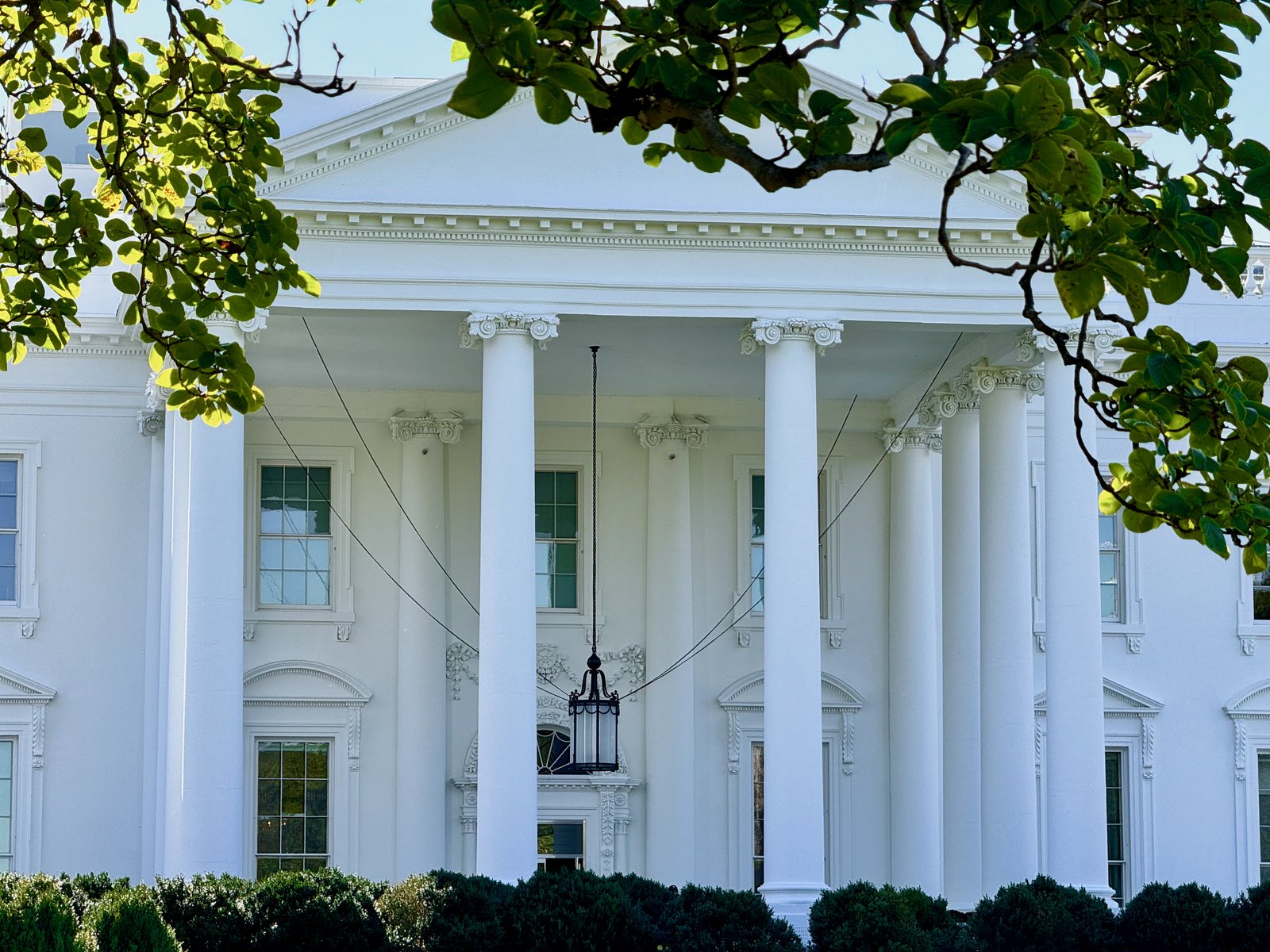
The White House Summit and the Industry Accord
The signing of the executive order followed a closed-door White House summit bringing together senior administration officials and chief executives from leading American technology and semiconductor firms, including Meta, Nvidia, Tesla, and Google parent Alphabet. At the conclusion of the summit, the White House released a 308-word joint declaration described by the President as a “morally binding national accord.”
The accord pledges cooperation between the commercial tech sector and the federal government to accelerate the buildout of domestic data centers, prioritize domestic nuclear and natural gas energy hookups for compute facilities, and safeguard advanced model weights from foreign espionage. In exchange, the administration signaled a light-touch regulatory approach, rolling back bureaucratic compliance obstacles established under prior executive directives.
- Nomenclature Mandate: Federal agencies have 60 days to update internal guidelines, procurement definitions, and policy charters to incorporate “Super Intelligence” in place of legacy AI terminology.
- Infrastructure Acceleration: The Department of Energy and Interior Department are tasked with fast-tracking federal permits for high-capacity electrical generation, specialized substations, and fiber corridors serving certified domestic data centers.
- Defense Integration: The Pentagon and the Defense Advanced Research Projects Agency (DARPA) are directed to prioritize “SI” applications across autonomous defense systems, cyber operations, and satellite telemetry.
Countering the Chinese Technological Challenge
Administration national security officials stressed that the executive order is directly linked to the geopolitical contest with Beijing. In recent months, Chinese state entities have poured hundreds of billions of dollars into sovereign computing clusters and advanced generative models designed to rival Western capabilities.
By establishing “Super Intelligence” as a national strategic imperative, the administration seeks to align federal research funding, export controls on advanced lithography, and domestic capital investments into a unified national security posture. National Security Council officials emphasized that maintaining a decisive lead in compute density and algorithmic efficiency is as fundamental to 21st-century deterrence as nuclear stockpiles were in the 20th century.
Reactions from Silicon Valley and Capitol Hill
Reaction across the technology industry reflected a mix of political maneuvering and strategic alignment. Industry executives who attended the White House summit welcomed the administration’s commitment to energy infrastructure acceleration and regulatory relief, noting that delays in electrical grid interconnection currently represent the single largest bottleneck facing American data center expansion.
On Capitol Hill, congressional response divided along familiar philosophical lines. Conservative lawmakers praised the initiative as a bold reassertion of American exceptionalism and industrial capability. Conversely, congressional critics argued that rebranding complex algorithmic tools as “Super Intelligence” risks inflating capabilities while distracting from pressing policy questions regarding algorithmic accountability, intellectual property protections, and workforce displacement.
Implementation Timeline for Federal Departments
Under the implementation instructions issued by the Office of Management and Budget (OMB), agency Chief Information Officers must submit comprehensive transition plans by November 30, 2026. The plans must detail how ongoing agency modernization projects, defense procurement contracts, and scientific research initiatives will incorporate the new standard.
As federal agencies begin rewriting technical manuals and contract solicitations, the executive order cements a defining philosophical shift in how the United States government intends to conceptualize, regulate, and deploy the most powerful computing technologies in human history.
Federal Procurement Standards and Commercial Impact
The practical impact of the nomenclature shift extends directly into federal procurement guidelines. By formally distinguishing Super Intelligence from commercial machine learning applications, federal contracting officers are instructed to implement enhanced cybersecurity thresholds, hardware provenance tracking, and supply chain integrity audits for all advanced software acquisitions. Government technology contractors seeking defense and intelligence contracts will be required to demonstrate sovereign domestic code provenance and verify that no foreign state actors possess backdoor access to core model weights or training pipelines.
Furthermore, the order directs the National Institute of Standards and Technology (NIST) to establish updated performance benchmarks that evaluate models based on autonomous reasoning capability, scientific synthesis, and strategic planning resilience rather than standard consumer chatbot conversational benchmarks.
Sources & Official Documentation
- Federal Register – Executive Order 14110 – Safe, Secure, and Trustworthy Development and Use of Artificial Intelligence
- Legal Information Institute (Cornell Law) – 44 U.S. Code § 3501 et seq. – Paperwork Reduction Act and Federal Information Technology Standards
- National Institute of Standards and Technology (NIST) – NIST AI 100-1 – Artificial Intelligence Risk Management Framework (AI RMF 1.0)