By Patriot Raw Editorial Board
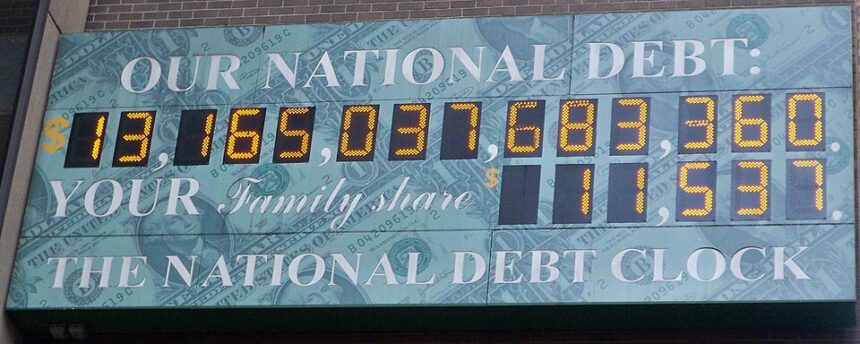
WASHINGTON — The official crossing of the $40 trillion national debt threshold in U.S. gross national debt is not merely another grim milestone in the Treasury Department’s daily accounting ledger. It is a profound structural warning sign that Washington’s decades-long addiction to deficit spending is rapidly undermining the economic foundation of American prosperity.
With annual net interest payments on the federal debt now surpassing the entire national defense budget, every dollar borrowed to fund routine government operations compounds the inflation and borrowing cost squeeze already punishing middle-class families. The time for rhetorical hand-wringing and temporary continuing resolutions has passed; America needs enforceable statutory spending caps.
The Failure of Washington’s Stopgap Budgeting
For years, lawmakers in both parties have treated federal budget deadlines like political theater, lurching from one short-term continuing resolution to the next as the Senate recently passed another stopgap to avert a shutdown before passing massive, multi-thousand-page omnibus spending packages in the dead of night. This broken process eliminates all legislative accountability and guarantees that automatic spending increases continue uninterrupted.
Stopgap patches do not save money; they obscure waste and prevent programmatic oversight. When government programs are funded on autopilot without rigorous line-by-line review, inefficient federal bureaucracies grow while essential national priorities compete for dwindling fiscal resources.
The High Cost of Inaction on American Families
The consequences of compounding federal debt are not theoretical. As detailed in our analysis of why July’s retail sales slump proves the high-cost squeeze isn’t over, everyday households are feeling the strain directly. High national debt creates persistent upward pressure on benchmark interest rates, resulting in 6.5%+ mortgage rates, steep auto loan costs, and crushing credit card interest for everyday households.
Inflation is not an act of nature; it is the direct economic consequence of federal spending far outstripping federal revenues, forcing monetary authorities to manage massive borrowing requirements. Every working family paying higher prices for groceries, energy, and housing is bearing the hidden tax of Washington’s fiscal irresponsibility.
A Realistic Blueprint for Fiscal Discipline
Restoring fiscal sanity does not require impossible austerity; it requires basic legislative discipline and proven budgetary rules:
- Enact Statutory Spending Caps: Congress must pass legally binding caps on discretionary spending tied to a fixed percentage of GDP, enforced through automatic across-the-board sequestration if limits are breached.
- Return to Regular Order: The House and Senate must debate and vote on 12 individual appropriations bills in broad daylight, eliminating the leverage of omnibus package deals.
- Implement Comprehensive Regulatory Budgeting: Federal agencies should be required to calculate the total private-sector compliance cost of all new regulations, ensuring that executive rules do not impose hidden burdens on economic growth.
- Target Waste and Unobligated Balances: Billions of dollars in unspent emergency authorizations and redundant agency programs remain scattered across federal accounts and should be immediately rescinded to offset national deficits.
A great nation cannot borrow its way to permanent strength. If Congress refuses to implement serious statutory caps now, the debt reckoning will not wait for future generations—it is arriving on our doorstep today.
Sources & Data References
- U.S. Department of the Treasury: Monthly Statement of the Public Debt and Debt to the Penny Report
- Congressional Budget Office (CBO): Long-Term Budget Outlook and Net Interest Cost Projections
- Federal Reserve Bank of St. Louis (FRED): Benchmark 10-Year Treasury Constant Maturity Rate and CPI Indicators
Why the Debt Trajectory Matters Now
The United States government’s debt trajectory is not merely an abstract fiscal concern — it has direct implications for interest rates, federal budget flexibility, and long-term economic competitiveness. The Congressional Budget Office projects that interest payments on the national debt will consume an increasingly large share of federal revenue over the coming decade, crowding out spending on defense, infrastructure, and social programs regardless of which party controls Congress. When debt service absorbs a large portion of the budget, policymakers lose the fiscal flexibility to respond to recessions, emergencies, or new priorities without either cutting existing programs or issuing additional debt.
The Statutory Reform Argument
Proponents of statutory debt reform argue that discretionary spending limits, balanced budget amendments, and statutory caps on deficit spending create structural incentives for fiscal discipline that pure political will cannot reliably sustain. Critics of such mechanisms point to historical instances where caps were modified, waived, or suspended when fiscal pressures made compliance politically untenable. The debate about whether statutory constraints can effectively bind future Congresses is a long-standing one in fiscal policy circles, and the current moment of high debt levels gives it renewed practical urgency.